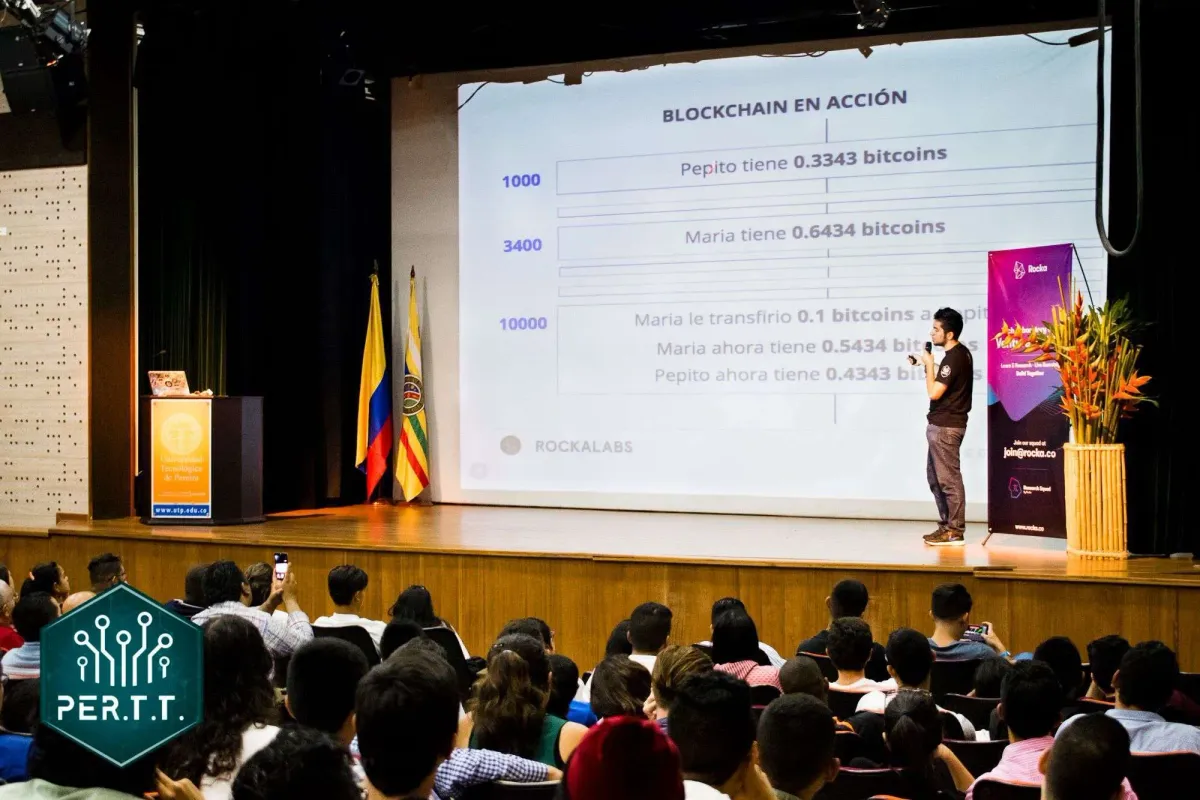
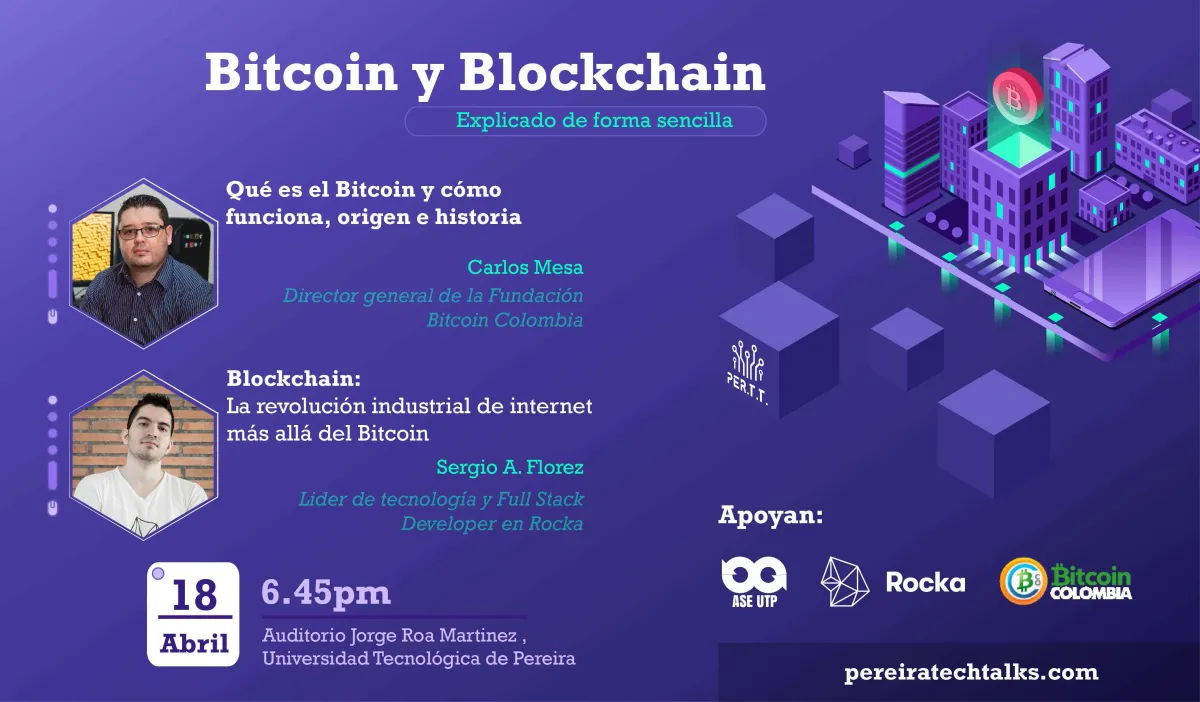
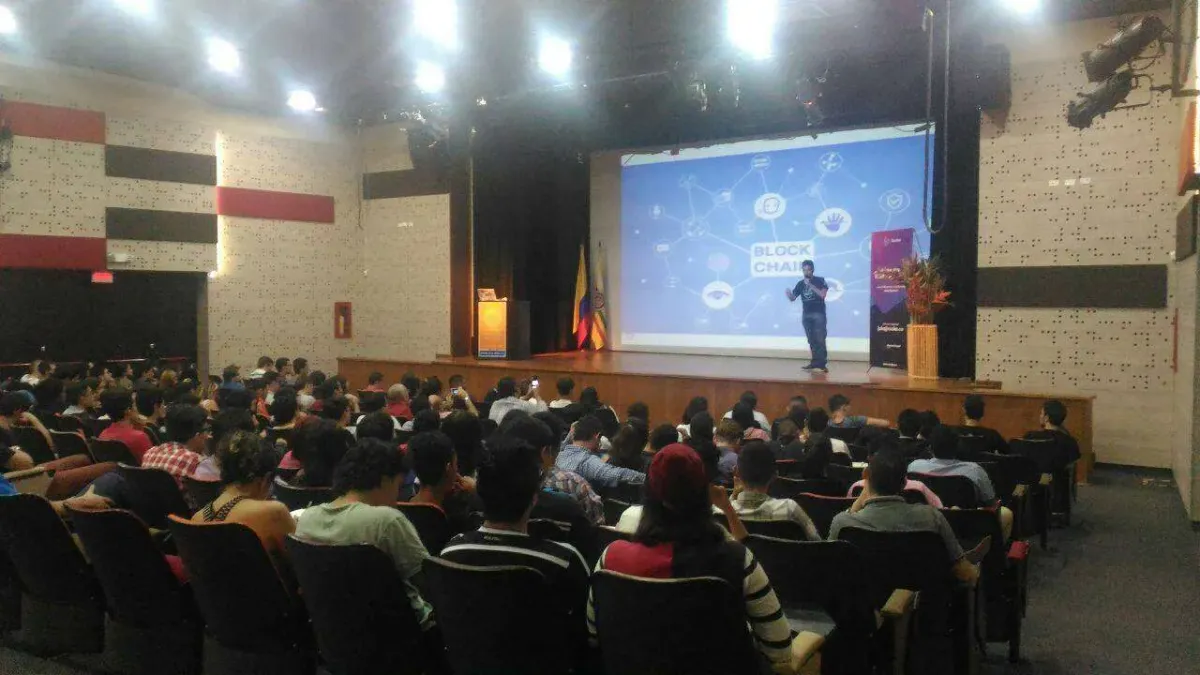
When I gave this talk at Pereira Tech Talks, I knew I had a challenge: everyone had heard about Bitcoin, but most people still thought blockchain was just “that cryptocurrency thing.” My goal was to show them that blockchain is to the internet what the steam engine was to manufacturing — a fundamental shift in how systems work.
The industrial revolution wasn’t just about faster production. It changed how societies organized, how economies functioned, how power distributed itself. Blockchain has that same potential — not because of what it is, but because of what it enables: trust without intermediaries.
The Problem: Centralized Trust is Fragile
Here’s the thing about trust in the digital age: we don’t actually trust each other directly. We trust intermediaries.
You trust your bank to hold your money. You trust PayPal to process your payment. You trust a notary to certify your documents. You trust Amazon to deliver what you ordered. Every digital transaction involves a middleman who assumes risk, charges fees, and holds power over your interactions.
This centralized trust model works reasonably well — until it doesn’t. The 2008 financial crisis showed us what happens when those trusted intermediaries fail. Corruption, fraud, reckless behavior, and systemic collapse. Banks that were “too big to fail” nearly brought down the entire global economy, and governments had to bail them out with taxpayer money.
The crisis exposed a fundamental weakness: when you centralize trust, you create a single point of failure. And when that point fails, the entire system crumbles.
The Alternative: Distributed Trust Networks
While governments were scrambling to patch the old system, a parallel movement was already building a new one. The cypherpunks — cryptography enthusiasts concerned with privacy and individual sovereignty — had been working on decentralized systems for years.
In 2009, someone using the pseudonym Satoshi Nakamoto published Bitcoin. The timing wasn’t accidental. Embedded in the first block was a headline: “The Times 03/Jan/2009 Chancellor on brink of second bailout for banks.”
Bitcoin proved something revolutionary: you can create trust without a central authority. No bank. No government. No company. Just math, cryptography, and distributed consensus.
That’s what blockchain enables — a distributed network of trust for exchanging value, information, or any data that requires verification and immutability.
What Blockchain Actually Is
Blockchain isn’t magic. It’s the elegant combination of three existing technologies:
1. Peer-to-Peer (P2P) Networks
Nodes communicate directly with each other. No central server. No single point of control. The network is resilient because it’s distributed across thousands of independent participants.
2. Cryptography
Every transaction is secured with digital signatures. You prove ownership with private keys, not identity documents. Hashing creates immutable fingerprints of data. The math makes fraud computationally infeasible.
3. Block-Based Storage
Transactions are grouped into blocks. Each block contains a reference (hash) to the previous block, creating a chain. Changing one block would require recalculating every subsequent block — practically impossible once the chain grows.
Together, these three elements create a system where trust is enforced by consensus and cryptography, not by a central authority.
Beyond Money: Real-World Applications
Here’s what most people miss: blockchain’s real power isn’t cryptocurrency. It’s decentralized verification and immutability.
Any time you need a trusted record that can’t be tampered with, blockchain becomes relevant. Let me give you concrete examples I’ve been following:
Supply Chain Transparency
Walmart uses blockchain to track food from farm to shelf. If there’s a salmonella outbreak, they can trace the contaminated batch in seconds instead of days. Every step — harvest, processing, transport, storage — is recorded on an immutable ledger.
Traditional supply chains rely on paper trails and trust. Blockchain makes the entire chain verifiable and transparent.
Digital Identity
In many countries, proving your identity is difficult or impossible. Refugees don’t have passports. Rural populations don’t have birth certificates. Blockchain-based identity systems let you prove who you are without relying on a government database or physical documents.
Microsoft’s ION project anchors decentralized identifiers on Bitcoin’s blockchain. Your identity is cryptographically yours — no central authority can revoke it.
Voting Systems
Election fraud happens because votes can be manipulated, double-counted, or discarded. With blockchain-based voting, every vote is cryptographically signed and recorded on an immutable public ledger. You can verify your vote was counted without revealing who you voted for.
Estonia has been experimenting with blockchain-based e-voting since the early 2010s. The results: auditable elections with verifiable integrity.
Land Registries
In countries with weak institutions, land ownership records are unreliable. Bribes, fraud, and lost paperwork mean people lose their property. Blockchain-based land registries create permanent, tamper-proof records of ownership.
Georgia partnered with the Bitcoin blockchain to register land titles. Once recorded, no corrupt official can alter the record.
Ethereum: Programmable Blockchain
Bitcoin proved you could create digital scarcity. But Vitalik Buterin asked a bigger question: what if the blockchain could execute logic, not just record transactions?
That’s Ethereum — a blockchain with a built-in programming language for smart contracts. Vitalik put it bluntly: “Bitcoin is excellent as digital money, but its scripting language is too weak to build advanced applications seriously.”
Smart contracts are self-executing code stored on the blockchain. When conditions are met, the contract automatically executes. No middleman. No trust required. The code enforces the agreement.
Solidity, influenced by JavaScript, lets you write these contracts. You can create decentralized finance (DeFi) platforms, NFT marketplaces, decentralized autonomous organizations (DAOs) — entire applications that run without a central operator.
DAPPs: Applications That Run Themselves
DAPPs (Decentralized Applications) are the next evolution. They’re apps that operate autonomously, without a company controlling them.
Here’s what makes a DAPP:
- Open source — The code is public and auditable
- Decentralized storage — Data lives on a public blockchain, not a company server
- Cryptographic tokens — Access and incentives are built into the protocol
- Consensus-driven — Changes require agreement from the network, not a CEO
The best DAPPs solve problems where centralization creates risk. Decentralized exchanges (DEXs) let you trade assets without trusting a company with your funds. Decentralized social networks let you own your content and audience without platform censorship. Decentralized file storage makes data resistant to takedowns and failures.
What Blockchain Actually Changes
Here’s my take after years of building and experimenting: blockchain doesn’t replace everything. But it fundamentally changes the rules wherever trust is expensive or centralized power is dangerous.
It’s not useful for most databases. Your grocery list doesn’t need blockchain. But when you need:
- Immutability — Records that can’t be altered
- Transparency — Public auditability without revealing identity
- Decentralization — No single point of failure or control
- Permissionless access — Anyone can participate without asking permission
That’s when blockchain becomes transformative.
The industrial revolution mechanized production. The internet digitized communication. Blockchain decentralizes trust.
And trust is the foundation of every economy, every institution, every system. When you change how trust works, you change everything.
Resources I Shared
Recommended Talks
- Innovando con blockchain — TEDex Costa Rica
- Blockchain 101 — Simple explanation for investors
- Blockchain: Más allá del bitcoin — José Juan Mora, TEDxSevilla
Tools and Frameworks
- Embark — Framework for building Ethereum applications
- Blockchain Startups
- Blockchain Jobs
- Preev, BitcoinCharts — Real-time converters
- Mastering Bitcoin — Andreas Antonopoulos book
News and Wallets
- DiarioBitcoin, CriptoNoticias
- CoinMarketCap — Historical data and charts
- Copay, Blockchain.info — Wallets
- View slides
- Pereira Tech Talks blog post — event recap
Let’s keep building.