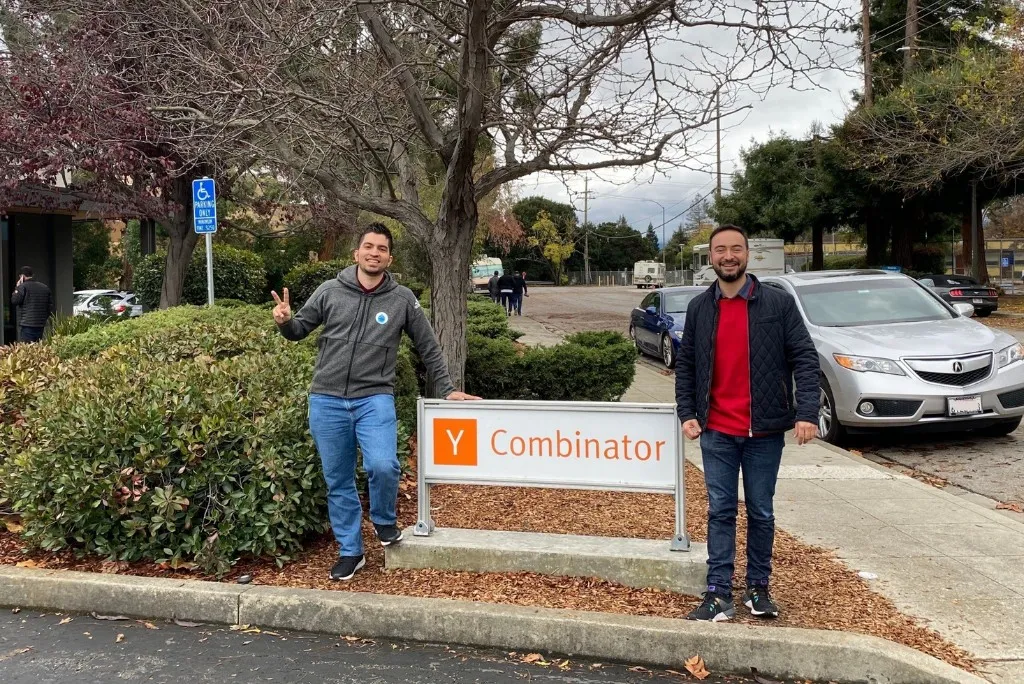
I gave a talk at Universidad Tecnológica de Pereira (UTP) in 2022 about how DailyBot got into Y Combinator. Not the highlight reel version — the real story. We applied three times. We got rejected twice. And when we finally got in, it wasn’t because the product suddenly became brilliant. It was because we learned how to see our own product clearly and communicate that clarity to others.
This is what changed between each application, what the YC interview was like, and what being part of YC actually taught us.
Why We Kept Applying
Y Combinator wasn’t the goal from day one. When we started DailyBot in 2017 at a Rocka.co internal hackathon, we were just trying to solve our own problem: too much time spent on manual check-ins, standups, and repetitive Slack admin work.
But as DailyBot started getting real traction — teams using it daily, organic growth through word of mouth, strong retention — we started thinking bigger. We wanted to scale faster. We wanted mentorship from people who’d built billion-dollar companies. We wanted to be part of a network that could help us avoid the mistakes we were about to make.
So we applied. And got rejected.
We applied again. Rejected again.
We applied a third time. Accepted.
Each rejection stung, but each one also taught us something.
First Application (2018): Too Early
The pitch: “DailyBot is an AI assistant that automates work inside Slack.”
The problem: We weren’t specific enough. “Automates work” could mean anything. The product did too many things and we hadn’t figured out what the core value was yet. Our pitch felt vague because we were still vague about what we were building.
Traction: A few dozen teams using it. Some paying customers, but not enough to show real momentum. Monthly recurring revenue was under $1K. Growth was slow and mostly driven by us manually reaching out to people.
What we learned: YC doesn’t fund ideas. They fund traction. We didn’t have enough proof that people actually wanted this yet. The product worked, but the market wasn’t pulling it from us — we were pushing it.
What we changed: We stopped trying to be everything to everyone. We focused on one core use case: async standups and check-ins for remote teams. We started talking to users more, building features they actually asked for, and tracking retention obsessively.
Second Application (2019): Better Product, Weak Go-to-Market
The pitch: “DailyBot automates async standups, check-ins, and team workflows for remote teams using Slack and Microsoft Teams.”
The problem: The pitch was clearer, but we still hadn’t nailed go-to-market. We had more users (a few hundred teams), better retention, but growth was inconsistent. We didn’t have a repeatable acquisition channel. We were still learning how people found us and why they stayed.
Traction: ~$5K MRR. Decent retention (70%+ monthly). Users loved it once they tried it, but getting them to try it in the first place was hard. Our funnel was leaky.
What we learned: Product-market fit isn’t just “people use your product.” It’s “people use your product and you can predictably acquire more of them.” We had the first part, but not the second. YC probably saw that we were still figuring out distribution.
What we changed: We doubled down on content marketing, SEO, and integration partnerships (Slack App Directory, Microsoft Teams marketplace). We started measuring every step of the funnel: signup -> activation -> first value -> retention. We got serious about understanding how teams discovered us and what made them stick.
Third Application (2020): Clear Story, Proven Growth
The pitch: “DailyBot is an async work automation platform for remote teams. We help distributed teams run standups, check-ins, surveys, and workflows without meetings — all inside Slack and Microsoft Teams.”
The problem: This time, there wasn’t one. The pitch was tight. The product was focused. The traction was real.
Traction: ~$15K MRR and growing 15-20% month-over-month. Hundreds of paying teams. Clear acquisition channels (Slack App Directory was driving 40% of signups). Strong retention (75%+ monthly, 85%+ annual). We had references from customers who would rave about us.
What changed: We weren’t guessing anymore. We knew who our customers were (remote-first tech companies, 10-100 employees), we knew why they bought (wanted to reduce meeting overhead and improve async communication), and we knew how they found us (app directories, content, word of mouth).
We also learned how to tell the story better. Instead of listing features, we focused on the outcome: “Teams save 5+ hours per week by automating repetitive work.” That resonated.
The application: We rewrote it from scratch. We were honest about what worked and what didn’t. We showed the growth chart. We explained our wedge (async standups) and our long-term vision (become the OS for remote work automation). We named our biggest competitors (Geekbot, Polly) and explained why we were winning.
This time, we got an interview.
The Y Combinator Interview
The YC interview is 10 minutes. That’s it. You’re in a video call with 3-5 partners, and they ask rapid-fire questions. No slides. No pitch deck. Just you, your co-founders, and a conversation.
Here’s what I remember:
First question: “What does DailyBot do?”
We had 30 seconds to explain it. I said: “DailyBot automates standups, check-ins, and team workflows inside Slack and Teams. Remote teams use us to replace status meetings with async updates. Saves hours every week.”
Next questions came fast:
- “How much revenue?” → “$15K MRR, growing 15-20% monthly.”
- “How do people find you?” → “Slack App Directory, content, integrations.”
- “Who are your competitors?” → “Geekbot, Polly. We have better AI, more integrations, and stronger async workflows.”
- “What’s your wedge?” → “Async standups. Once teams use us for standups, we expand into surveys, workflows, kudos, all inside chat.”
- “What’s the biggest risk?” → “Slack or Microsoft could build this. But they haven’t in 5 years, and we’re moving faster.”
- “Why you?” → “We’ve been remote-first for years. We built this for ourselves. We know the pain.”
Then they asked the hardest question: “What if Slack copies you?”
I said: “They could. But Slack wants to sell seats. We want to sell productivity. Our incentives are different. And by the time they build it, we’ll have moved to the next thing.”
I think that answer landed.
The whole interview was under 10 minutes. They thanked us. We left.
Two weeks later: Accepted into YC W21 batch.
What Y Combinator Actually Taught Us
Getting into YC felt like a huge win. And it was. But the real value wasn’t the badge — it was what we learned during the batch.
1. Growth is a Muscle
YC’s mantra: “Make something people want, then grow.” They pushed us to set aggressive growth goals (10% week-over-week) and hit them. That forced us to experiment faster, kill what didn’t work, and double down on what did.
We learned that growth isn’t luck. It’s a system. You test channels, measure everything, and optimize relentlessly.
2. Talk to Users Every Week
YC partners drilled this into us: “Are you talking to users?” Every week, they’d ask. If the answer was no, they’d push back.
We started doing weekly user interviews. We asked why people signed up, what they loved, what frustrated them, what they’d pay more for. Those conversations shaped our roadmap more than any internal brainstorm.
3. Focus is Everything
We kept wanting to add features. YC kept asking: “Will this help you grow faster?” If the answer was no, they’d tell us to cut it.
That ruthless focus helped us avoid feature bloat. We said no to a lot of good ideas so we could say yes to the few great ones.
4. Fundraising is a Skill
YC taught us how to pitch investors, how to structure a round, how to negotiate terms. We raised a seed round during the batch. The YC network made introductions, and the brand gave us credibility we didn’t have before.
But the best advice was: “Raise fast, then get back to building.” Fundraising is a distraction. Do it well, do it quickly, then go back to what matters: the product and the users.
5. The Network is Real
The YC alumni network is one of the most valuable parts. Need an intro to a customer? Someone in the batch knows them. Need advice on pricing? There’s a Slack channel for that. Considering a pivot? Ten founders have done it and will tell you what worked.
That network compounds over time. Years later, we’re still getting value from the connections we made.
What Getting Into YC Didn’t Do
Here’s what YC didn’t do:
- It didn’t validate the product. The market already validated it. YC just gave us tools to scale faster.
- It didn’t make us successful. We still had to build, ship, sell, support, and grow. YC gave us advice and access, but we did the work.
- It didn’t solve our problems. We still had churn to fight, bugs to fix, competitors to outpace. YC just made us better at solving those problems ourselves.
Getting in was a milestone. But the real work started after.
Advice for Anyone Applying
If you’re thinking about applying to YC, here’s what I’d tell you:
1. Apply even if you’re not ready. We weren’t ready the first two times. But each application forced us to articulate our vision, measure our progress, and see our gaps. That clarity was valuable even without an acceptance.
2. Show traction. Ideas are cheap. Traction is expensive. If you have users, revenue, or growth — show it. If you don’t, get some before applying.
3. Be specific. “We’re building an AI platform” is vague. “We automate standups for remote teams” is specific. Specific wins.
4. Know your numbers. MRR, growth rate, retention, churn, CAC, LTV — know them cold. You’ll get asked.
5. Be honest. Don’t exaggerate. Don’t hide weaknesses. YC has seen thousands of startups. They can smell BS. Honesty builds trust.
6. Nail the one-liner. You have 10 seconds to explain what you do. Practice it until it’s effortless.
7. Don’t give up after one rejection. We got rejected twice. We kept iterating. If you believe in what you’re building, apply again.
Where We Are Now
In 2022, DailyBot was recognized as one of Y Combinator’s Top Companies. We’ve grown to thousands of teams, expanded into new markets, and built features we couldn’t have imagined in 2017.
But the most important thing we learned — from building at Rocka, from failing repeatedly, from getting rejected by YC twice, from finally getting in — is this:
Success is just iteration at scale. You build, you ship, you learn, you fix, you grow. There’s no shortcut. There’s just the work.
And if you keep doing the work, eventually the pieces fall into place.
Let’s keep building.