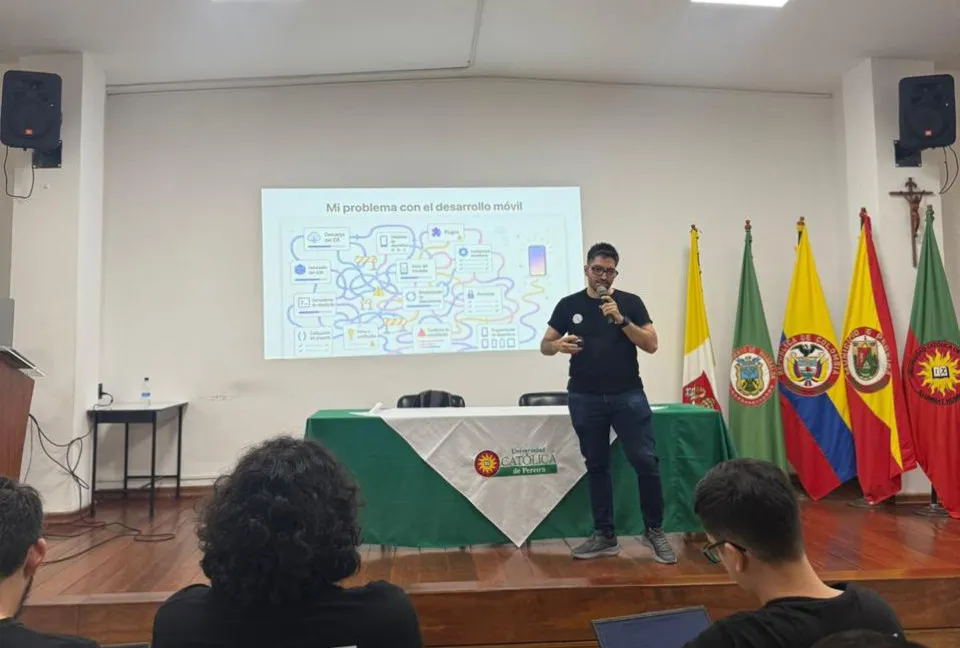
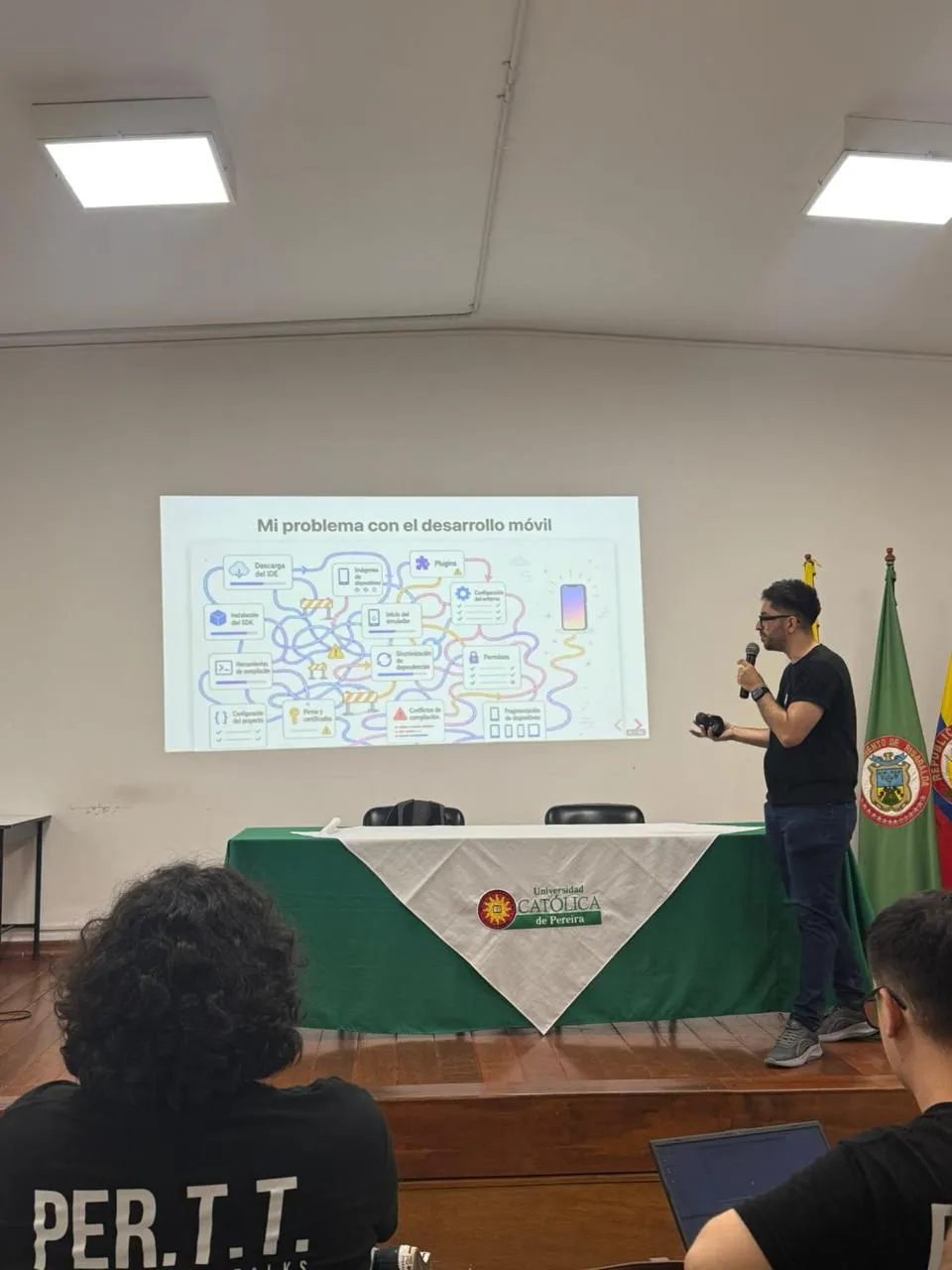
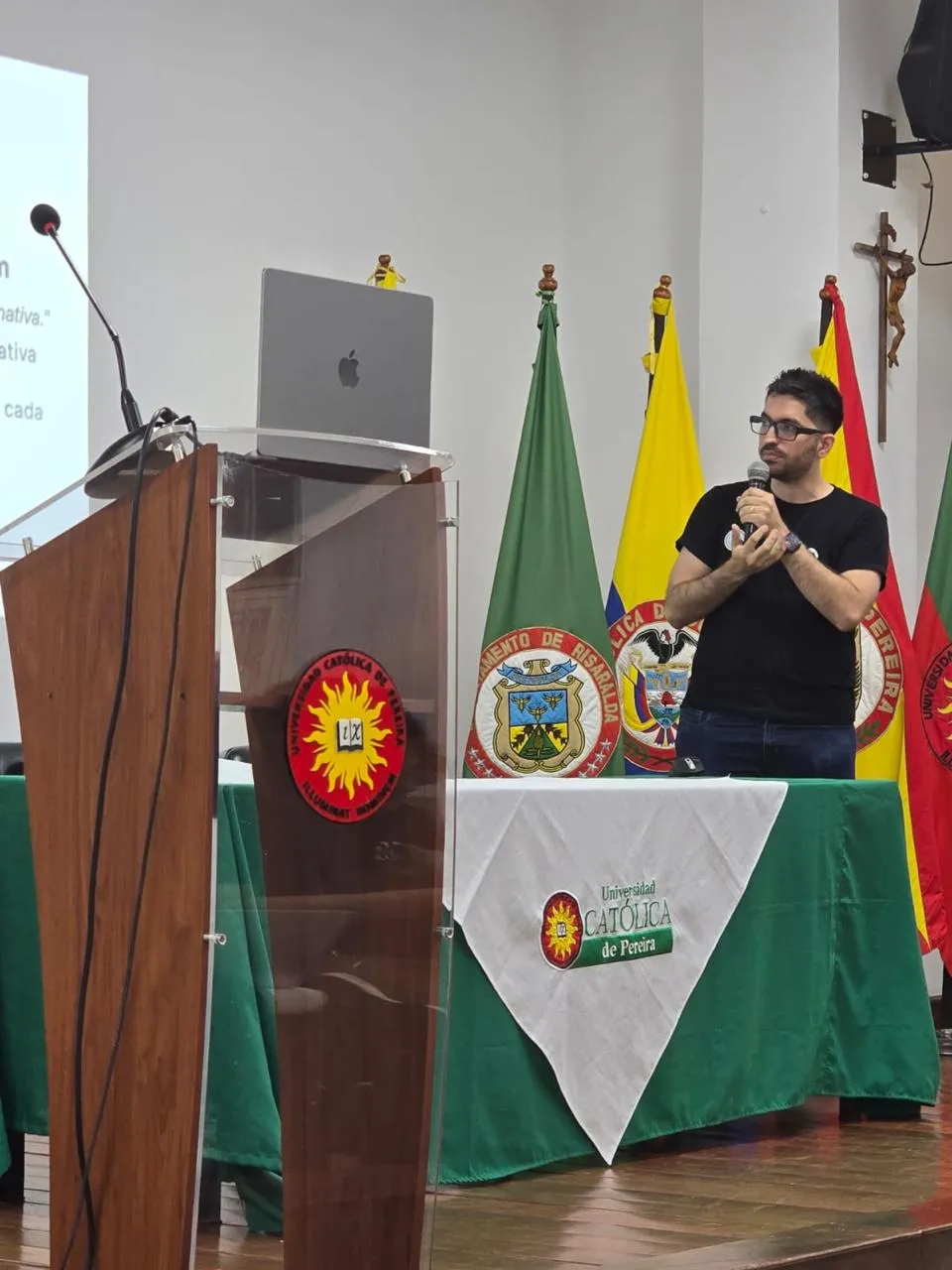
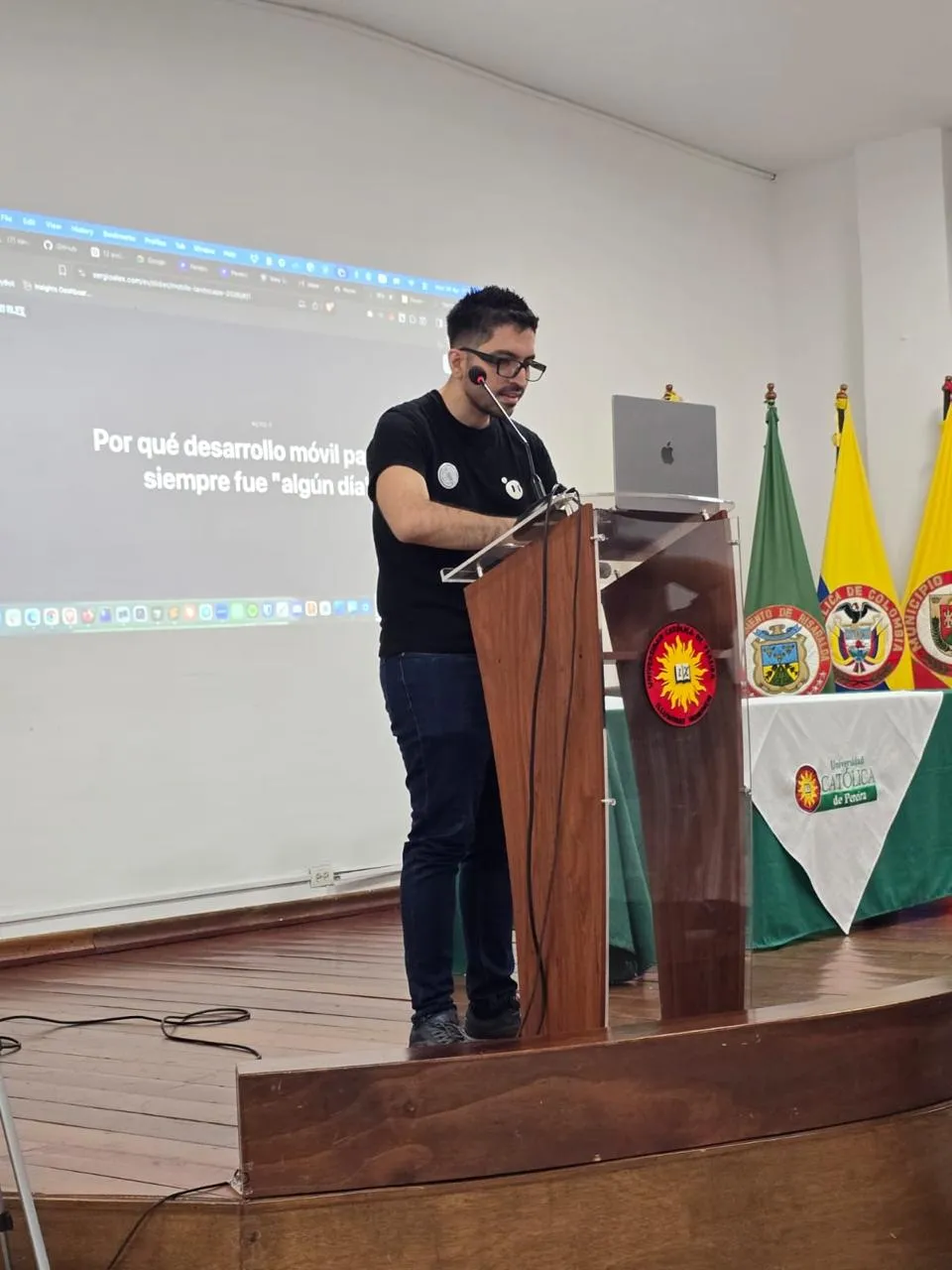
I just stepped off the stage at Universidad Católica de Pereira, where I gave a talk about the one corner of software I’d spent fifteen years circling without ever landing on: mobile development. The event is Abril Mobile, a Pereira Tech Talks meetup.
Here’s the honest backdrop. I’ve been full stack my whole career, and I’ve always made a point of learning every technology I could get my hands on — backend, frontend, infrastructure, DevOps. If something new catches my eye, I dig into it; that’s just how I work. Mobile was the stubborn exception — not for lack of interest, but because every time I leaned in, something pushed me back. Early on it was as basic as hardware: I didn’t have a computer that could run the tooling of the day, and that alone was enough to send me back to the server side. So mobile kept getting filed under “someday.”
That’s the angle I want to take here. Not “the expert tour of the mobile ecosystem,” but something more honest: if you’ve always watched mobile from the outside, what’s the sanest way to get in?
Why this talk, from someone who always said “someday”
And it was never a one-off. Years later I came back to it with hybrid stacks like Cordova and Ionic — better hardware, newer tools — and hit a different wall: too many seams, and a result that never felt truly native. Each attempt ended the same way, with me back in the place I knew: servers, APIs, and infrastructure.
What changed isn’t that mobile got easier overnight. It’s that I finally decided to treat “how do I learn this?” as a real engineering question — map the terrain, run the explorations, and commit to a path instead of bouncing off the entry barrier one more time. That decision is the spine of the talk. I lay out the full exploration in my companion write-up, Mobile Development in 2026: State of the Art and Where to Start Today, and the slides for it live here: the mobile landscape deck.
The map: four shapes, two survivors
The deck walks through the whole ecosystem, so I’ll keep this part fast. The mobile world takes four shapes — native (one platform, full control, full lock-in), cross-platform with native UI (shared logic or UI that compiles down to native — where Flutter and Kotlin Multiplatform live), hybrid (web inside a native shell — low friction, real ceilings), and web/PWA (an installable site, no app store, no native feel).
Then the quick discards — quick because I’ve already lived several of them: native-only loses cross-platform reach, Ionic and Capacitor I’ve hit the ceiling on before, .NET MAUI is a world I’m not in, PWAs can’t reach deep enough into the device, and React Native is solid but keeps its roots in JavaScript. What’s left after that honest cut is two names: Flutter and Kotlin Multiplatform.
But this is about the choice, not the catalog.
Two philosophies, one goal
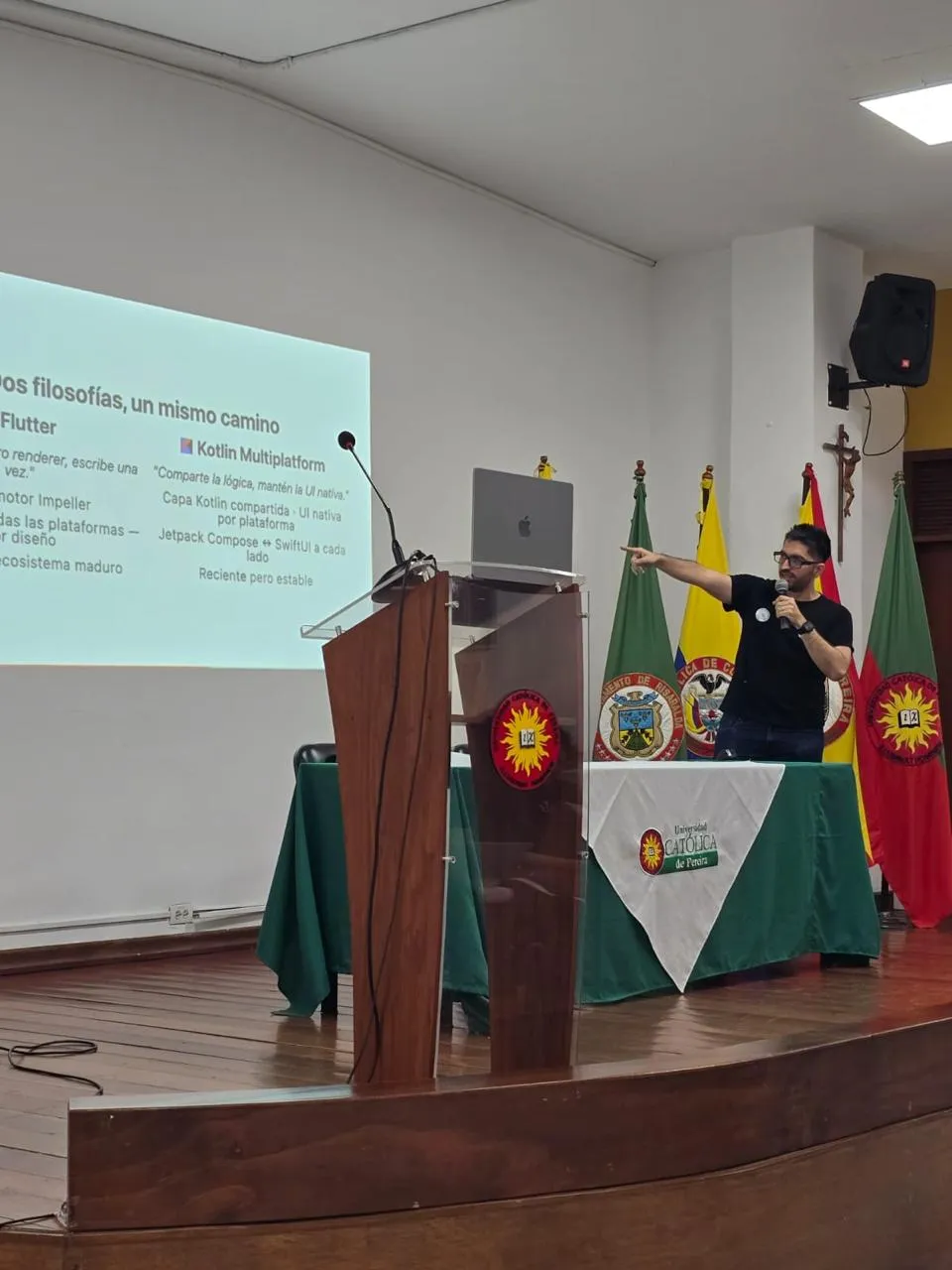
Flutter and Kotlin Multiplatform want the same thing — write less, ship to both platforms — but they get there from opposite directions. Flutter says “trust our renderer, write once”: one engine (Impeller) draws the same UI everywhere, with instant hot reload and a mature package ecosystem. Kotlin Multiplatform says “share the logic, keep the UI native”: a shared Kotlin layer underneath, with Jetpack Compose on Android and SwiftUI on iOS drawing each platform’s real, native interface.
Both are genuinely good bets. The honest version is that they solve slightly different problems — and that’s the part worth sitting with before I tell you where I land.
Why I chose Kotlin Multiplatform
My pick is Kotlin Multiplatform. Not because it’s the easy path — it isn’t — but because it’s the one I find most defensible over the long run. The UI stays 100% native on each platform, the shared logic doesn’t compromise the user experience, it backs into existing apps through progressive migration rather than a rewrite, and it has JetBrains plus Google standing behind it with real production adopters using it at scale.
The obvious objection is the learning curve, and it’s real: KMP is steeper than Flutter, with two UI layers to keep in mind and an Xcode integration that’s still rough at the edges. Here’s the thing, though — and this is where I think the AI era genuinely changes the math: that curve is far easier to climb than it used to be. Coding agents turn “months of ramping up in a new ecosystem” into a much faster loop. They scaffold the project, untangle the build errors that used to eat an afternoon, and suggest the platform-specific pieces while you keep your eyes on the architecture. The curve didn’t disappear — but the tool that flattens it is sitting right next to you now.
So it’s a trade I’m making knowingly: a steeper start in exchange for the bet I’d rather be holding in three years.
A meetup that was all about mobile
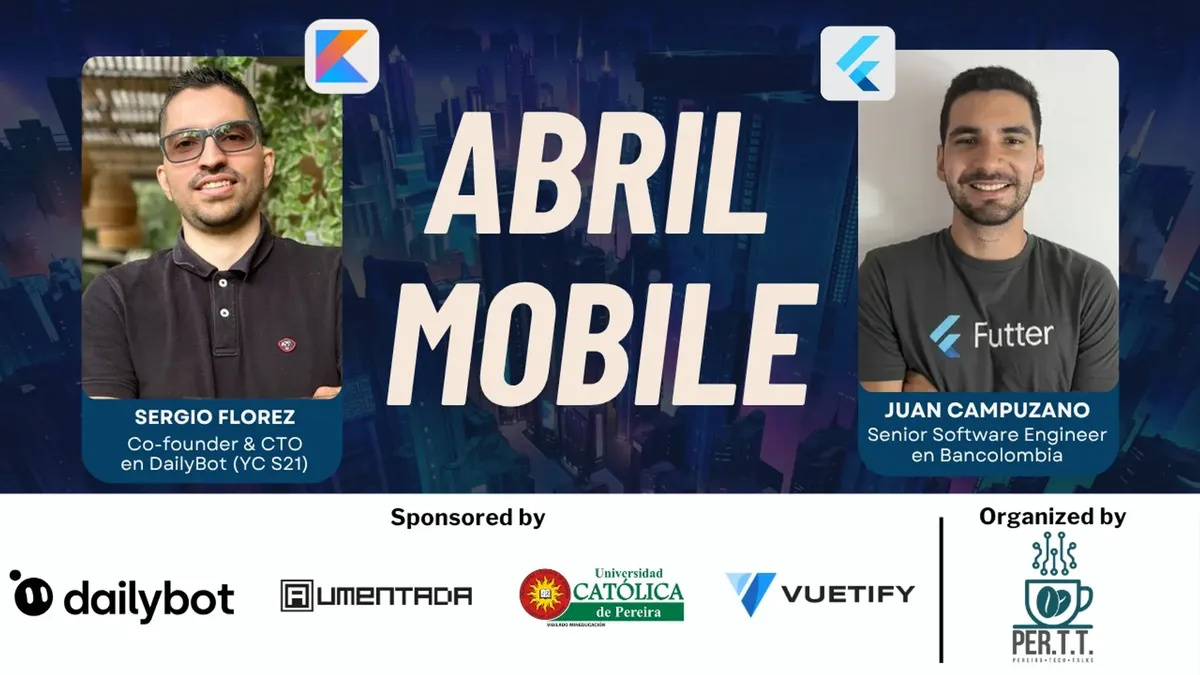
I’m not the only speaker, and that’s what makes the night feel complete. Juan Campuzano (juan-campuzano) takes the Flutter side, sharing his expertise as a senior software engineer building real mobile products — his talk, Generative UI - Flutter, comes at the same problem from the other framework.
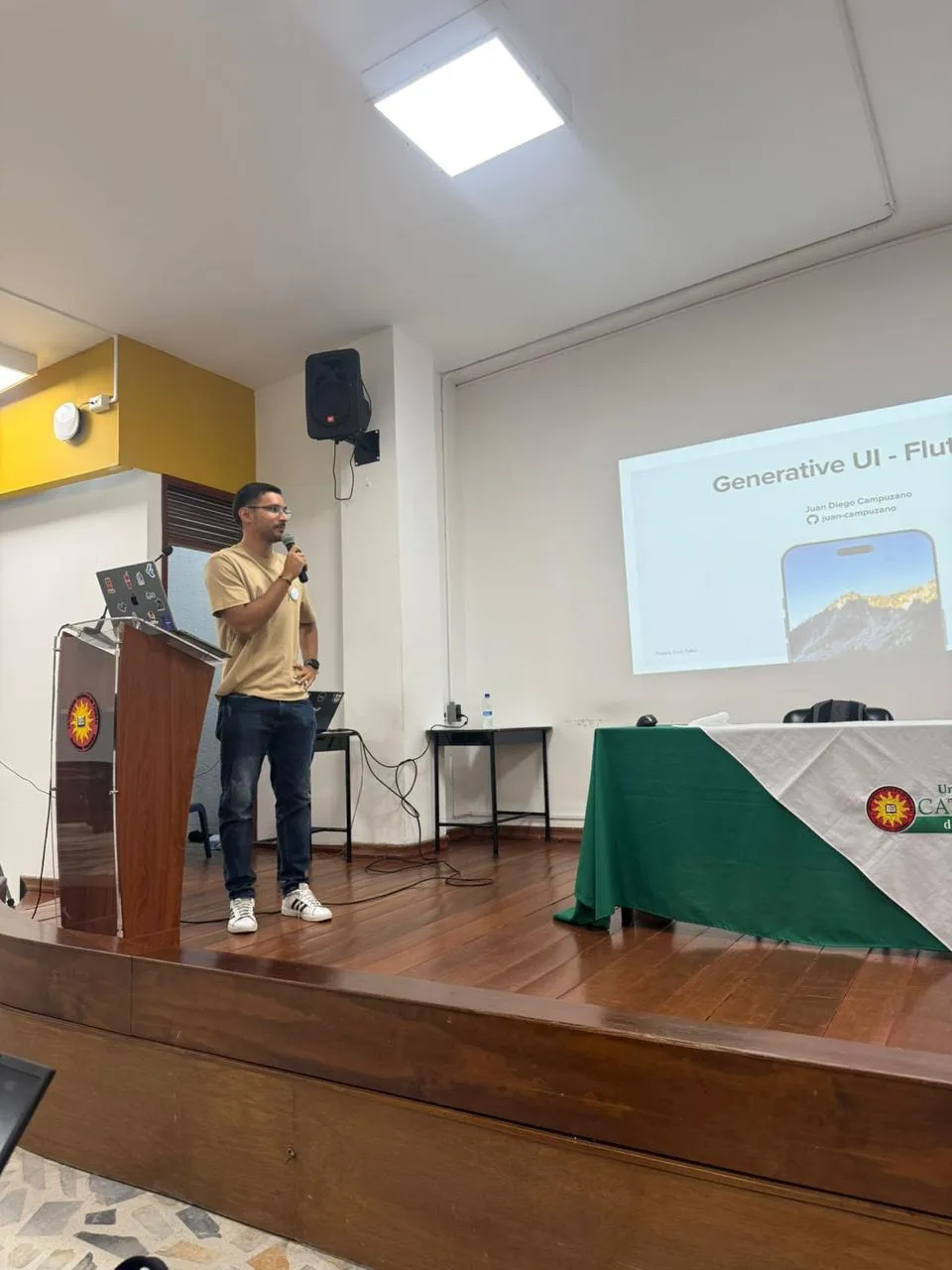
Between the two of us, the whole meetup is a single conversation about mobile from both angles: my case for Kotlin Multiplatform and Juan’s for Flutter. If you’re on the fence about which path to start with, it’s hard to ask for a better side-by-side than hearing each one argued by someone actually building with it.
Memories from the event
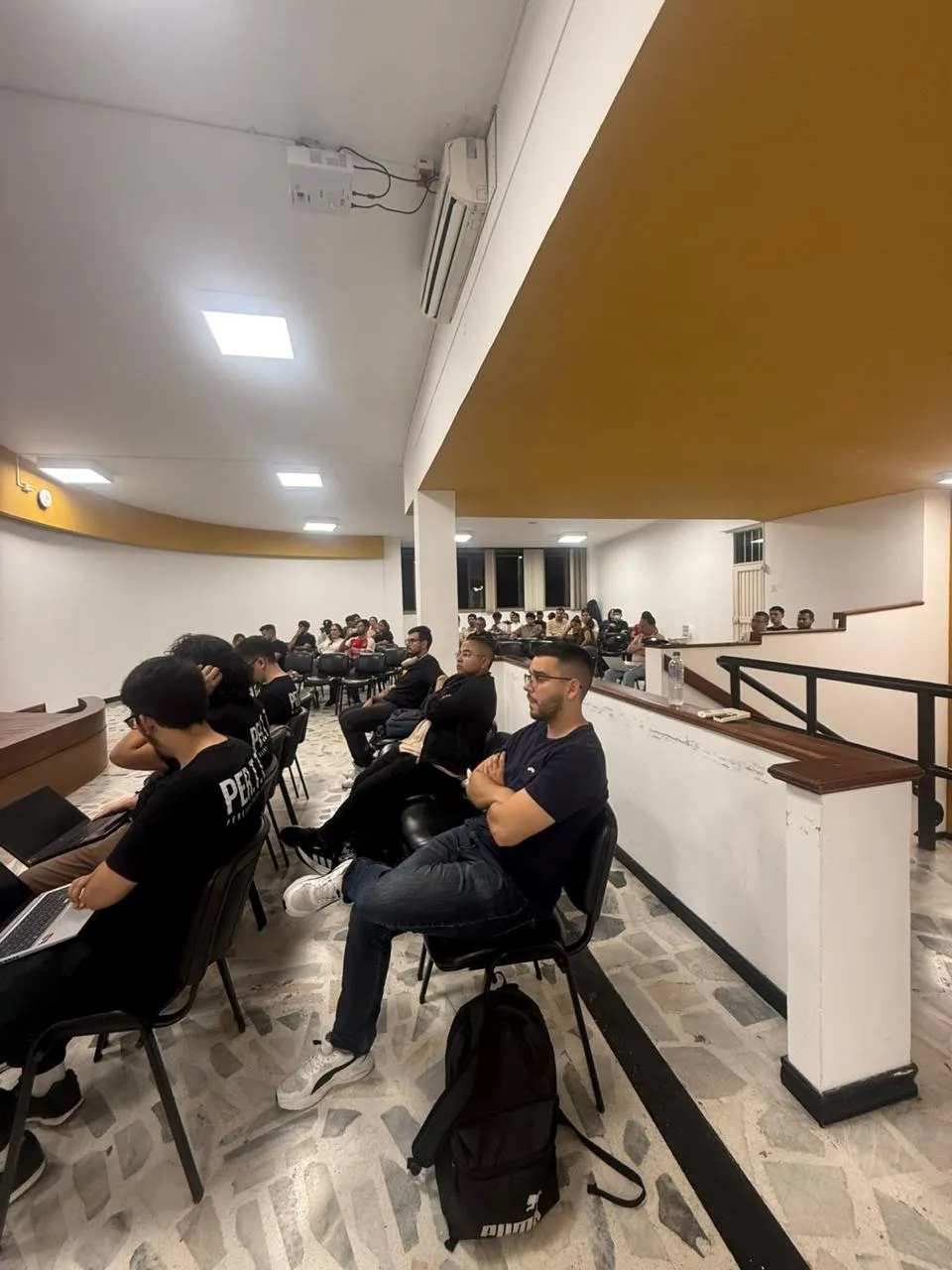
The best part of a Pereira Tech Talks night is never just the slides — it’s the room. A full house at Universidad Católica de Pereira, a community that has kept mobile on the agenda for years, and the kind of questions that only come from people who actually want to build something.
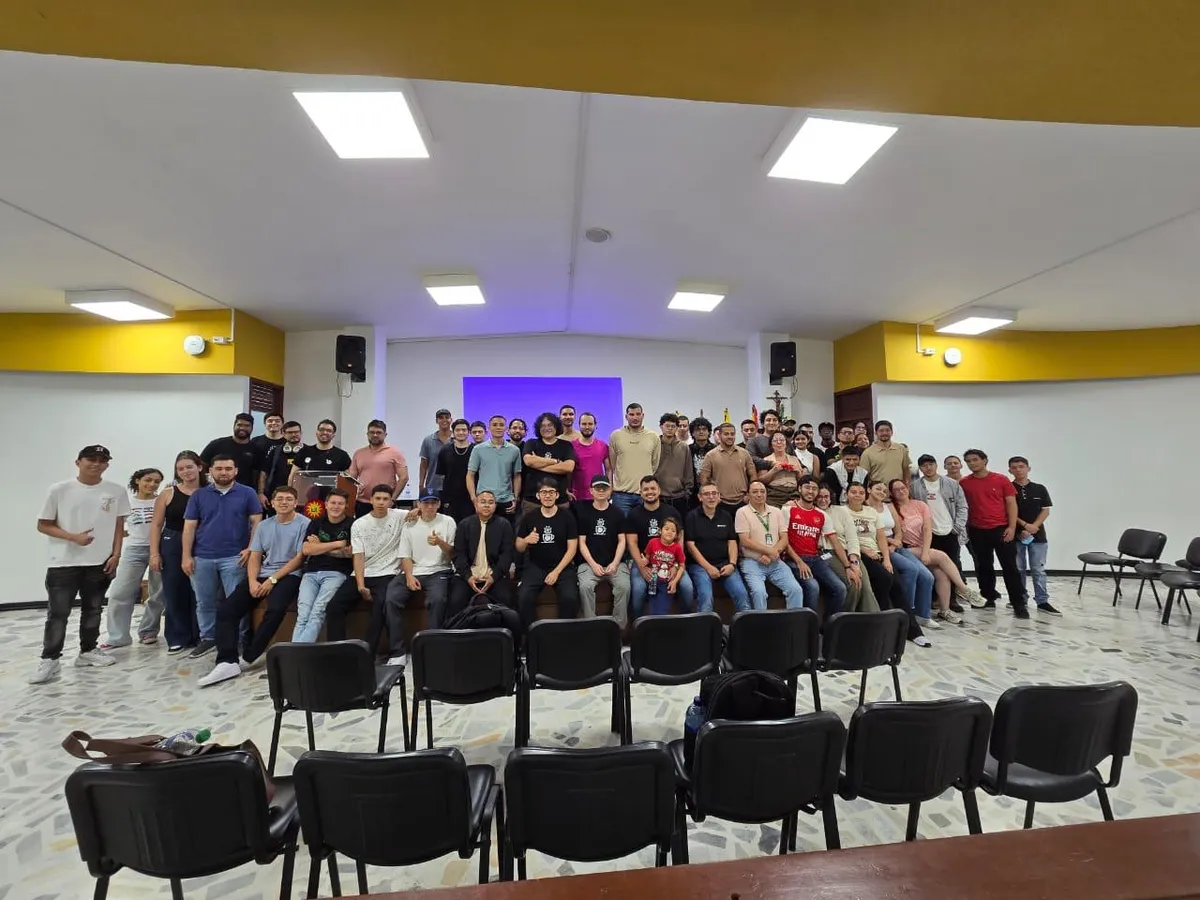
If you want the full argument behind the talk, the deck and the companion post go deeper than I can here. The short version is the one I keep coming back to: the barrier I used to hit is gone, the tools are ready, and with an agent next to you the steeper path is no longer the scary one.
Let’s keep building.
Resources
- Abril Mobile — Pereira Tech Talks — the meetup this talk was part of
- The mobile landscape deck — the slides for this talk
- Kotlin Multiplatform — JetBrains’ approach to sharing logic while keeping native UI per platform
- Flutter — Google’s cross-platform framework; Dart language, Impeller rendering engine
- Compose Multiplatform — shared UI on top of Kotlin Multiplatform
- Juan Campuzano on GitHub — co-speaker, Flutter side of the meetup

Sergio Alexander Florez Galeano
CTO & Co-founder at DailyBot
Colombian software engineer and entrepreneur (DailyBot, YC S21). I write about AI agents, developer tools, startups, and the craft of software engineering — and I build this site in the open at XergioAleX.com.
Stay in the loop
Get notified when I publish something new. No spam, unsubscribe anytime.
No spam. Unsubscribe anytime.