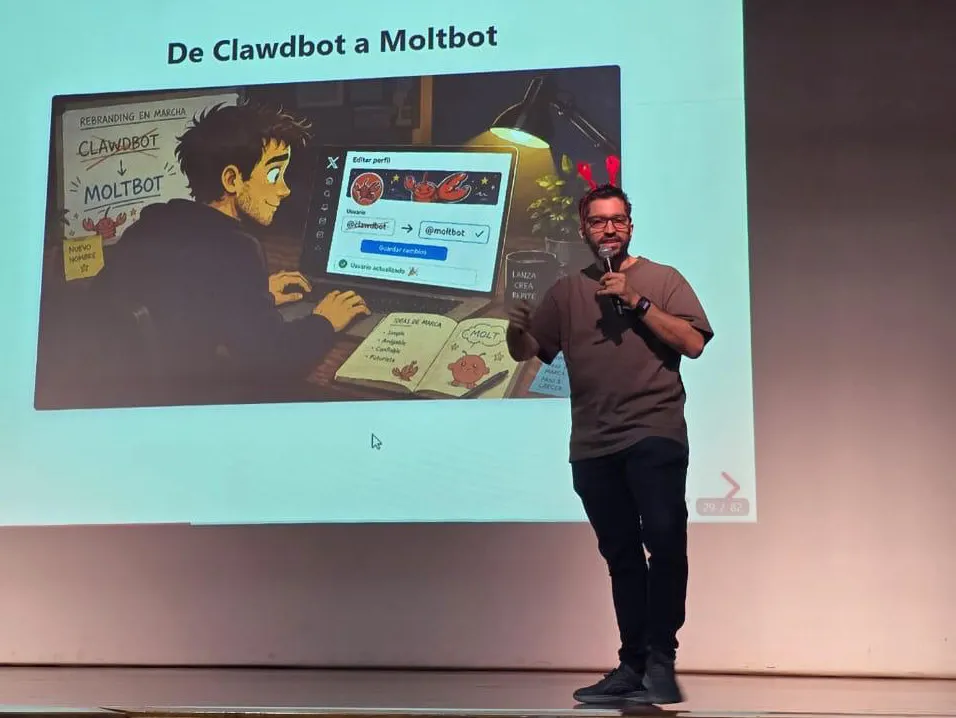
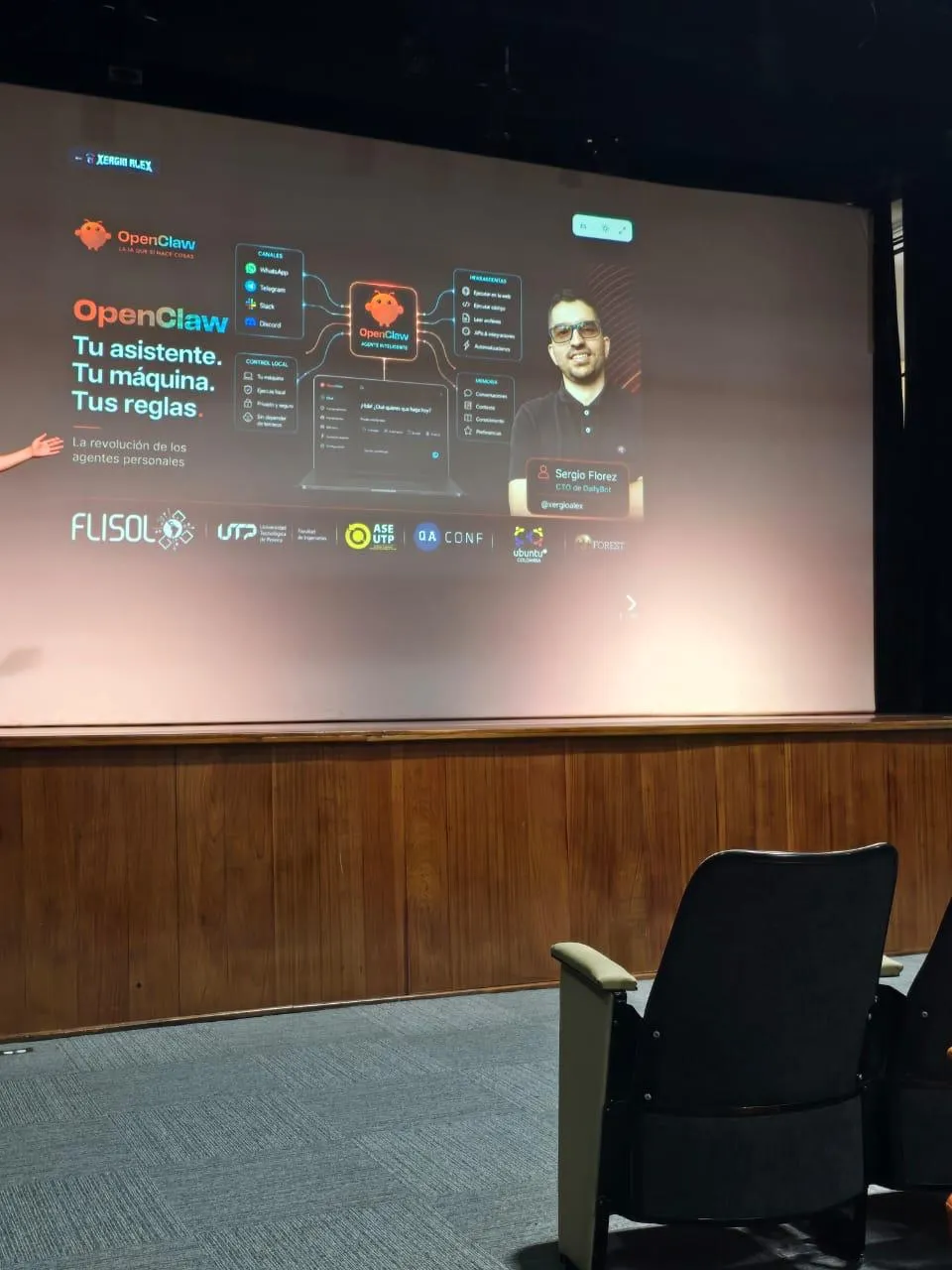
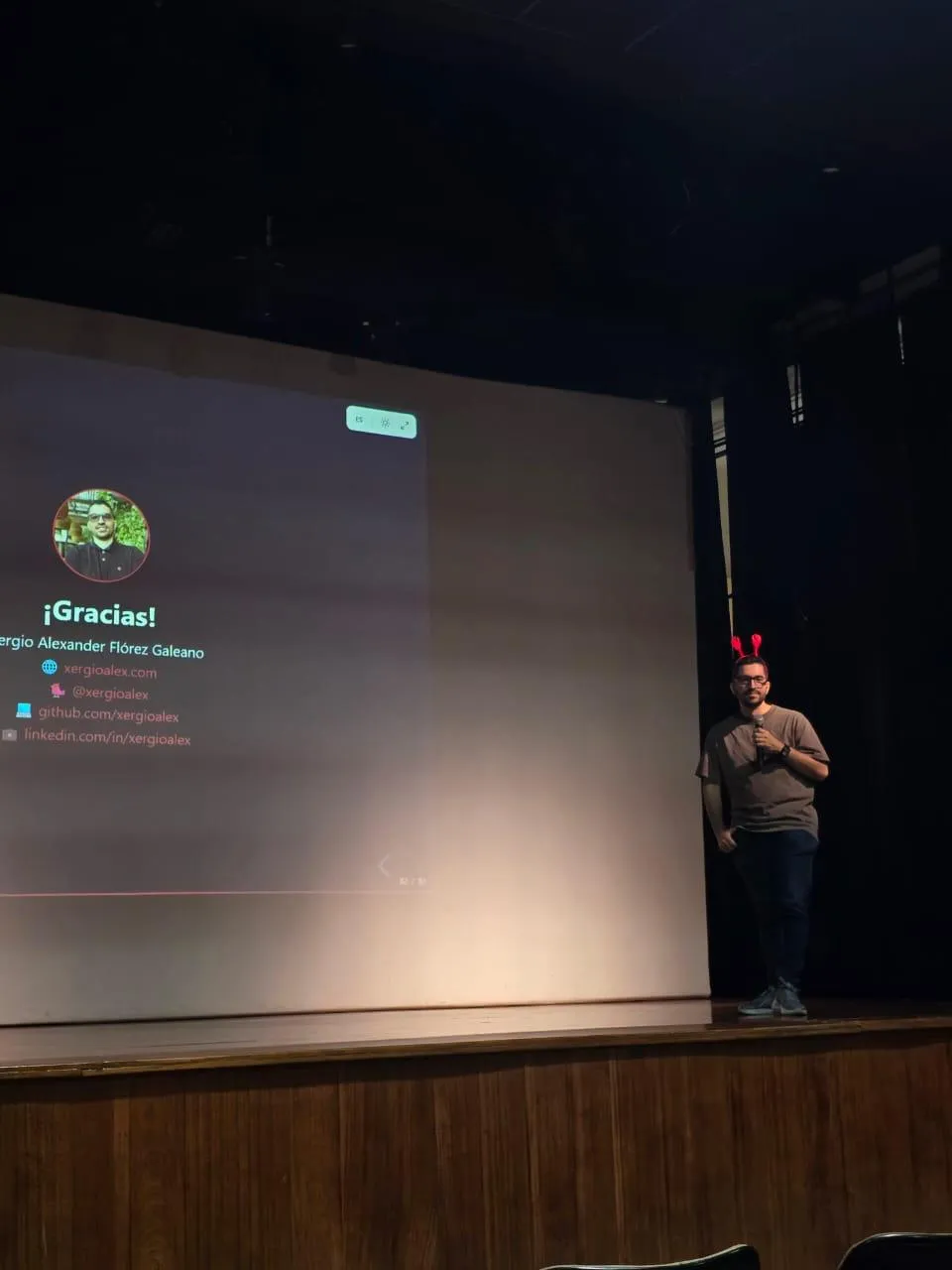
I’m at FLISOL with a microphone in one hand and a pair of red lobster antennae on my head, telling the story of a project that went from a one-hour WhatsApp bot to one of the most important things to happen to open source all year: OpenClaw. FLISOL — the Festival Latinoamericano de Software Libre — is the largest free-software gathering in Latin America, run on the same day across dozens of cities, and this edition lives at the Universidad Tecnológica de Pereira, hosted by the Facultad de Ingenierías alongside ASE UTP, QA CONF, Ubuntu Colombia, and FOREST.
I’m telling this story at this festival on purpose. OpenClaw isn’t just a clever piece of software — it’s an open-source story, and FLISOL is exactly the room where that part matters most.
Why OpenClaw belongs on a free-software stage
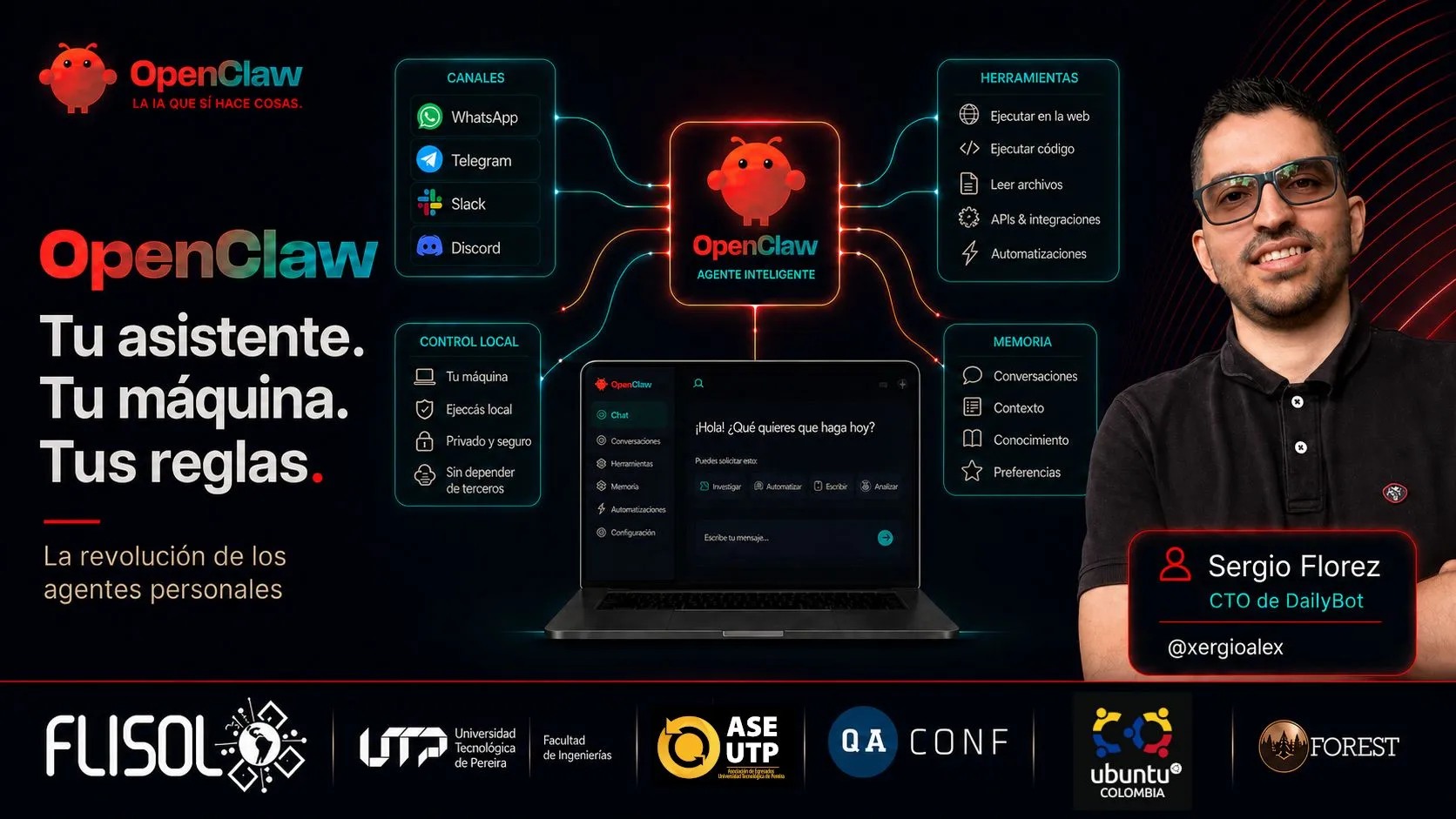
OpenClaw runs on your machine, under your rules, driven by an AI model you choose — and the whole thing is configured in plain Markdown, no code required. Its tagline says it in six words: “Your assistant. Your machine. Your rules.” That’s not a marketing line bolted on after the fact; it’s the design. The agent isn’t rented from a platform or locked behind someone else’s servers. It’s yours.
That is a deeply free-software idea, which is why FLISOL is the right place to tell it. The whole point of a festival like this is that the tools shaping our lives should be open, inspectable, and owned by the people who use them. OpenClaw takes that principle and aims it at the one piece of software everyone is suddenly racing to control: the personal AI agent. I’ve already written the full story in my deep-dive, OpenClaw: Your Assistant. Your Machine. Your Rules., and the slides for this session live in the companion deck — so up here I can move fast and stay on the narrative.
The story I’m here to tell
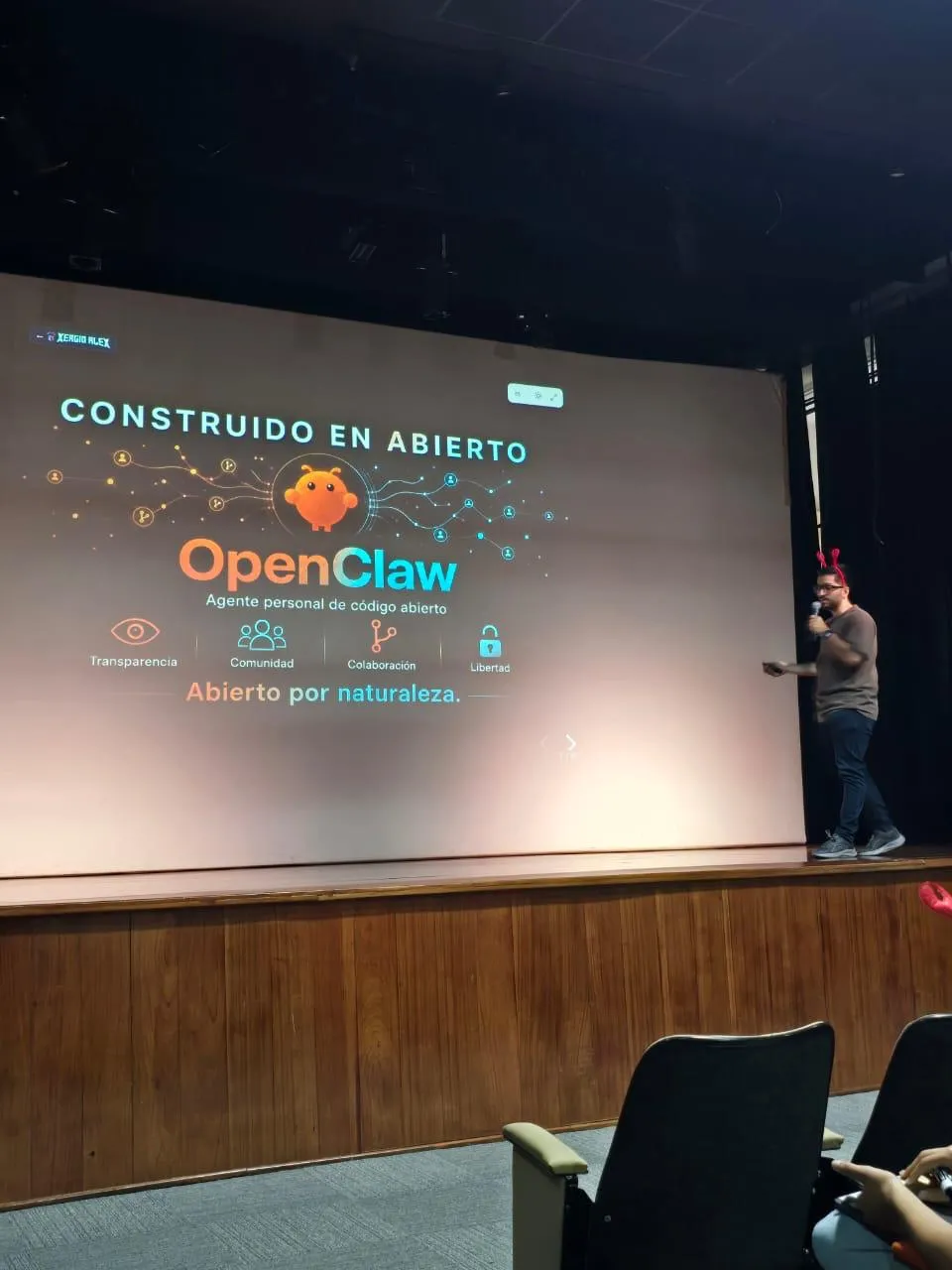
OpenClaw’s origin sounds made up, and that’s half of why it’s fun to tell. Peter Steinberger — the Austrian developer behind PSPDFKit, who walked away from a successful company and then spent a couple of years burned out and unable to write code — got annoyed that he couldn’t talk to Claude from WhatsApp. So he built a bridge in about an hour, asked Claude what to call it, got “Clawdbot,” pushed it to GitHub, and went to sleep.
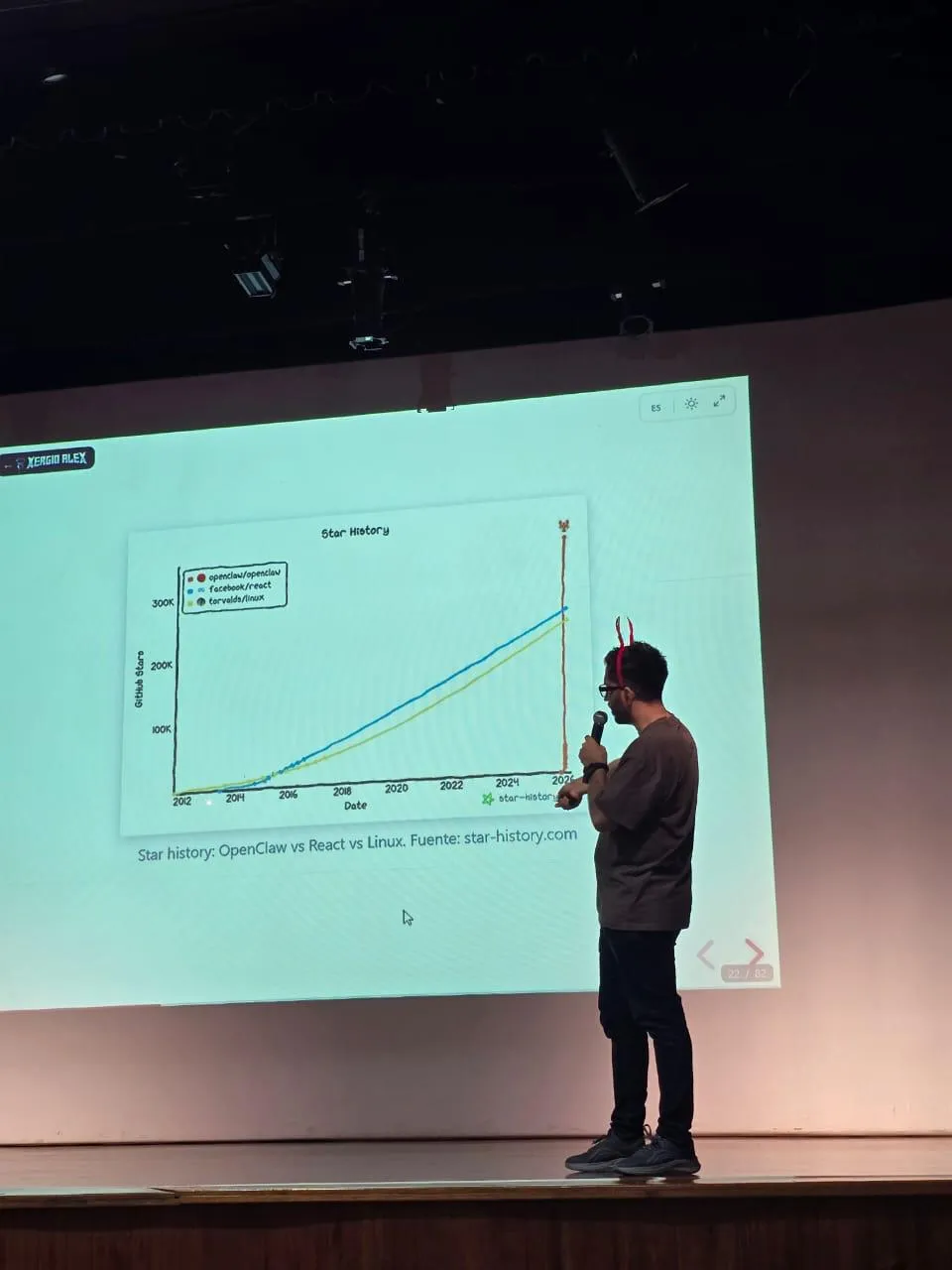
For two months almost nothing happened. Then the curve broke physics: thousands of stars in a day, tens of thousands in a weekend, past React’s decade-long total in roughly sixty days. I won’t re-run every number here — that’s what the deep-dive is for — but up here the star-history chart does the work for me.
Then comes the part the room enjoys most: the triple rebrand. A cease-and-desist from Anthropic (Clawdbot sounded too much like Claude), a 5am Discord rename to Moltbot, crypto scammers grabbing the freed-up handle to pump a fake $CLAWD token, a wave of harassment from the people they scammed — and, days later, a third and final name: OpenClaw. Three names in under a week, one lobster mascot that survives all of it.
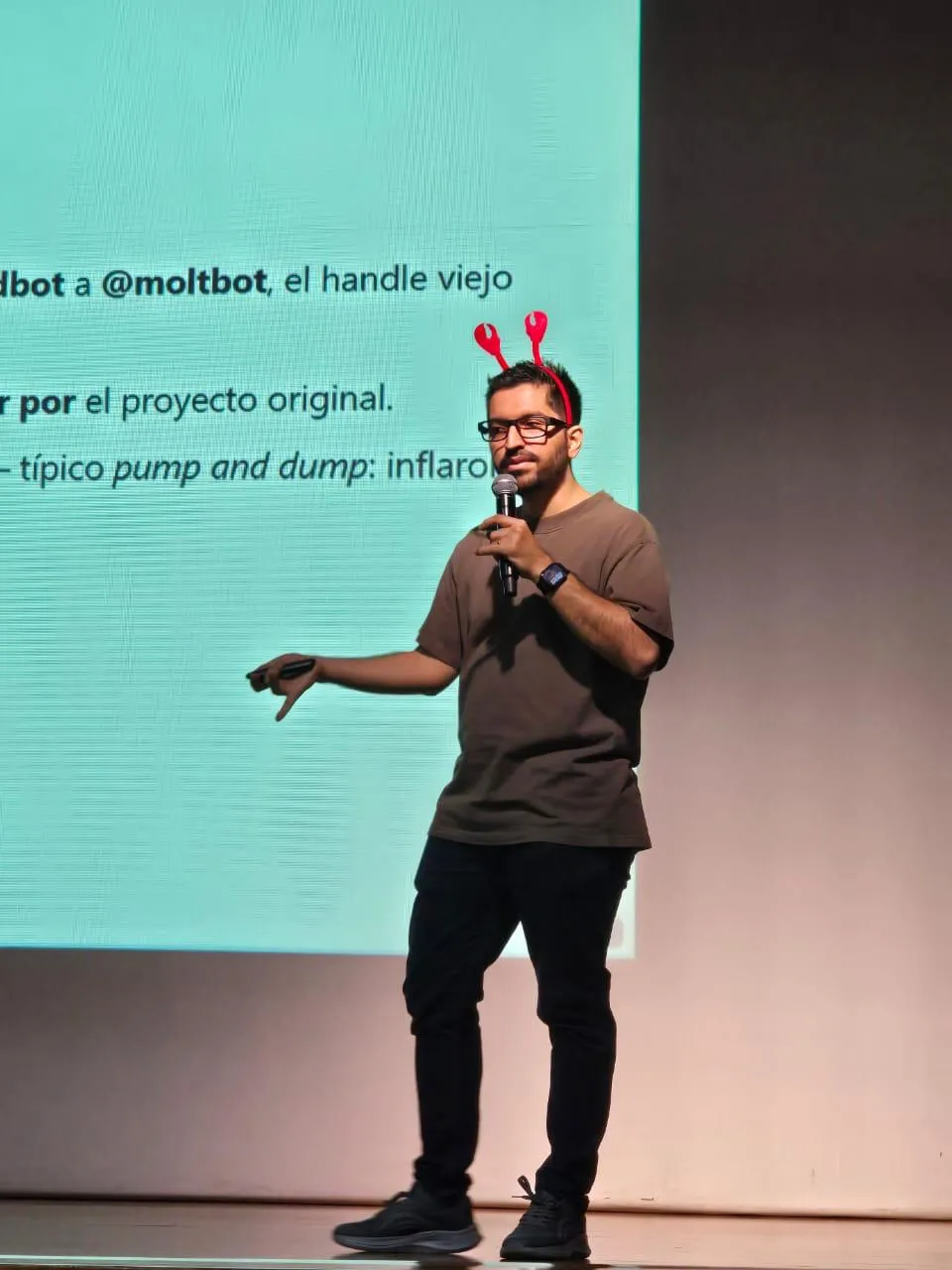
And then the bigger point, the one I most want a free-software audience to sit with: OpenClaw doesn’t just grow — it drags the whole ecosystem forward. Agents get their own social network (Moltbook, which Meta snapped up three months after launch), their own payment, identity, and email infrastructure, an enterprise layer from NVIDIA (NemoClaw), and a swarm of community clones small enough to run on a Raspberry Pi. After OpenClaw, every big assistant has to add file access, real execution, and integrations just to keep up. An open-source weekend project reset the minimum bar for what “an agent” even means.
What it comes down to
If there’s one idea I want to land at FLISOL, it’s that none of this comes out of a boardroom. It comes from one developer scratching his own itch, building in the open, and letting a community run with it. That’s the oldest story in free software — Linux, WordPress, Wikipedia — and OpenClaw is just its newest, fastest chapter. The full argument lives in the deck and the deep-dive post; the short version is the one I leave the room with, borrowed from Peter himself: the lobster is loose, and it’s not going back into the tank.
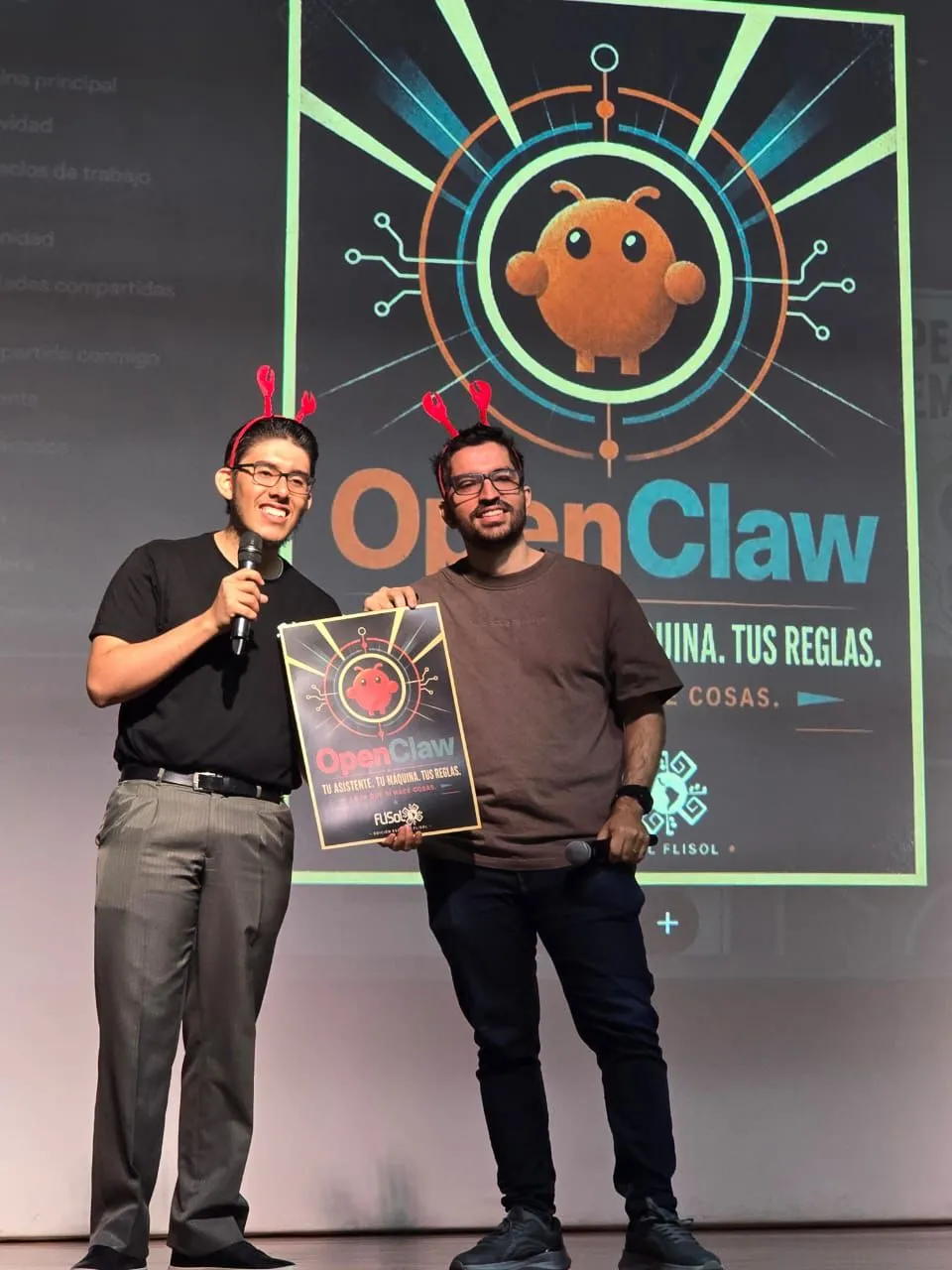
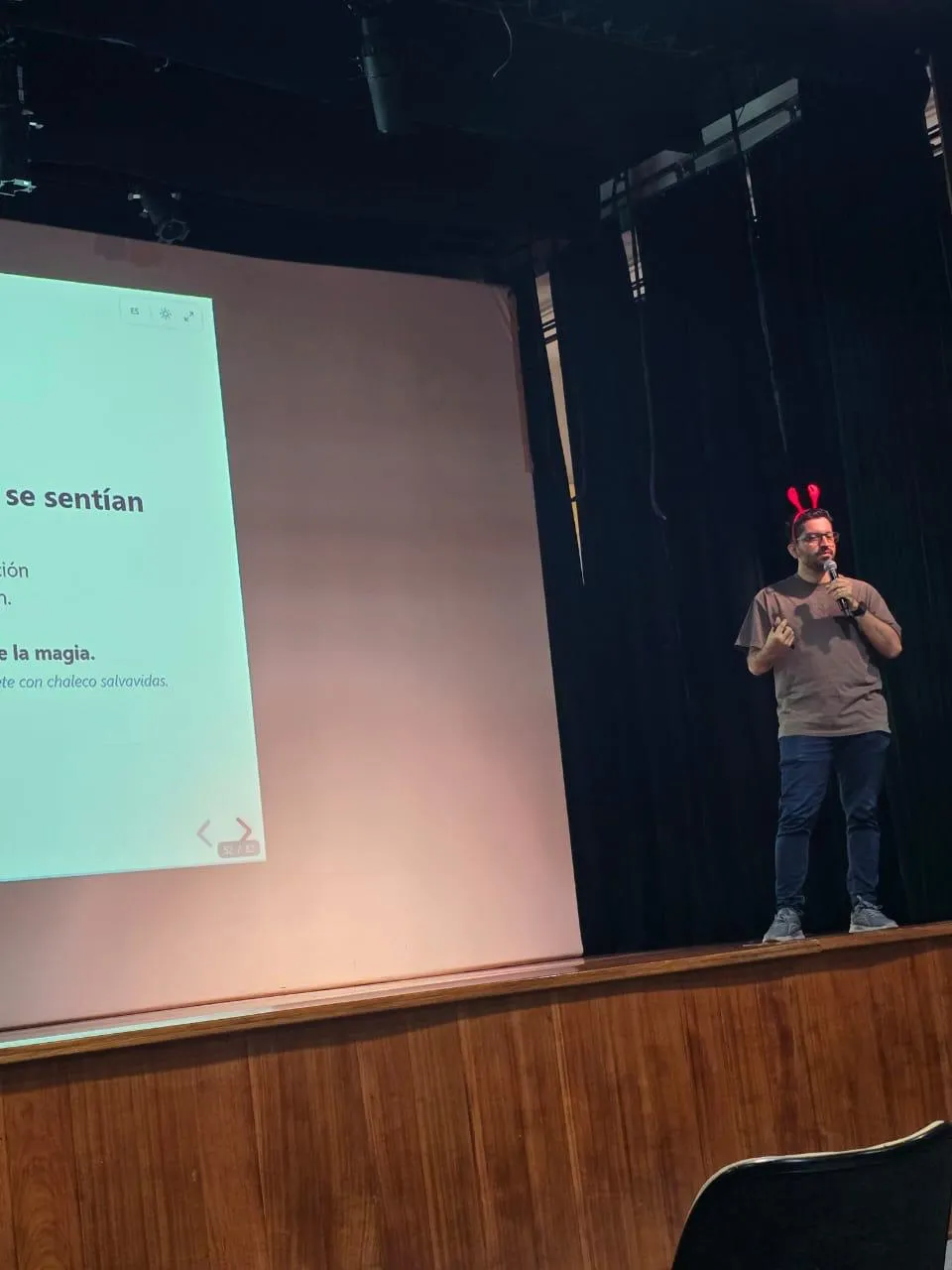
Scenes from FLISOL
The best part of a festival like this isn’t the slides — it’s a room full of people who actually care that their tools stay open.
Resources
- FLISOL — Festival Latinoamericano de Software Libre — the event this talk is part of
- OpenClaw: Your Assistant. Your Machine. Your Rules. — the full written story behind the talk
- The OpenClaw talk deck — the slides for this session
- OpenClaw — the official project site
- OpenClaw on GitHub — the repository
Sergio Alexander Florez Galeano
CTO & Co-founder at DailyBot
Colombian software engineer and entrepreneur (DailyBot, YC S21). I write about AI agents, developer tools, startups, and the craft of software engineering — and I build this site in the open at XergioAleX.com.
Stay in the loop
Get notified when I publish something new. No spam, unsubscribe anytime.
No spam. Unsubscribe anytime.