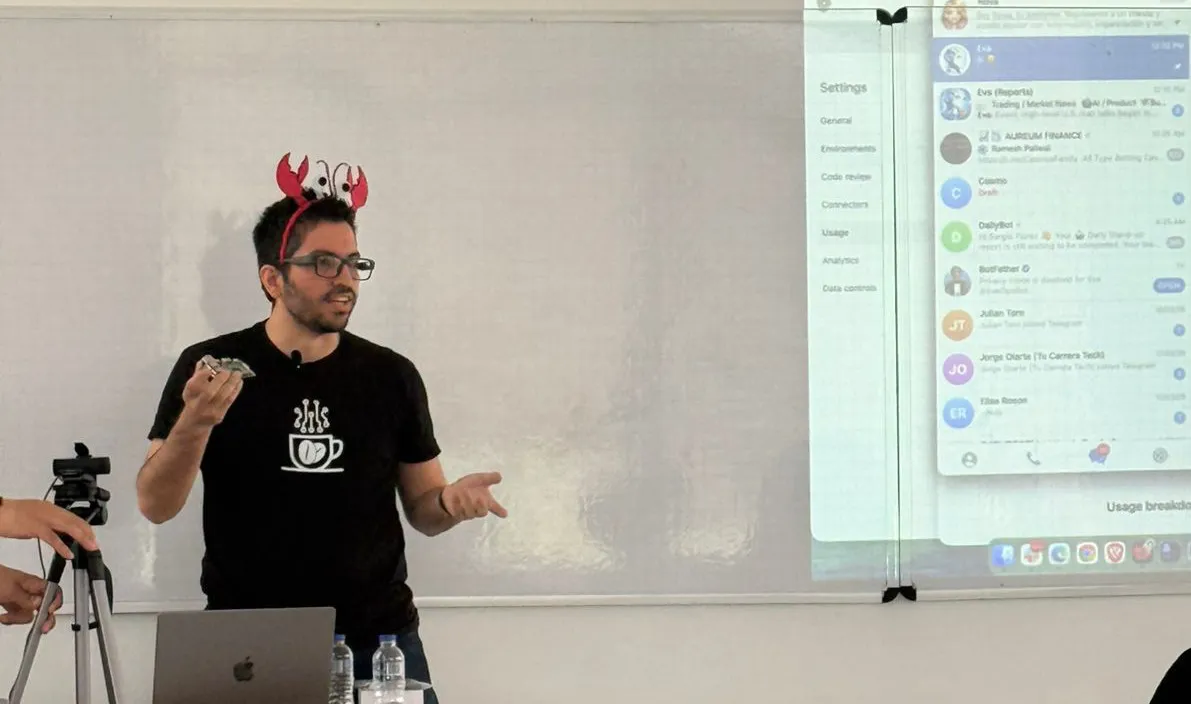
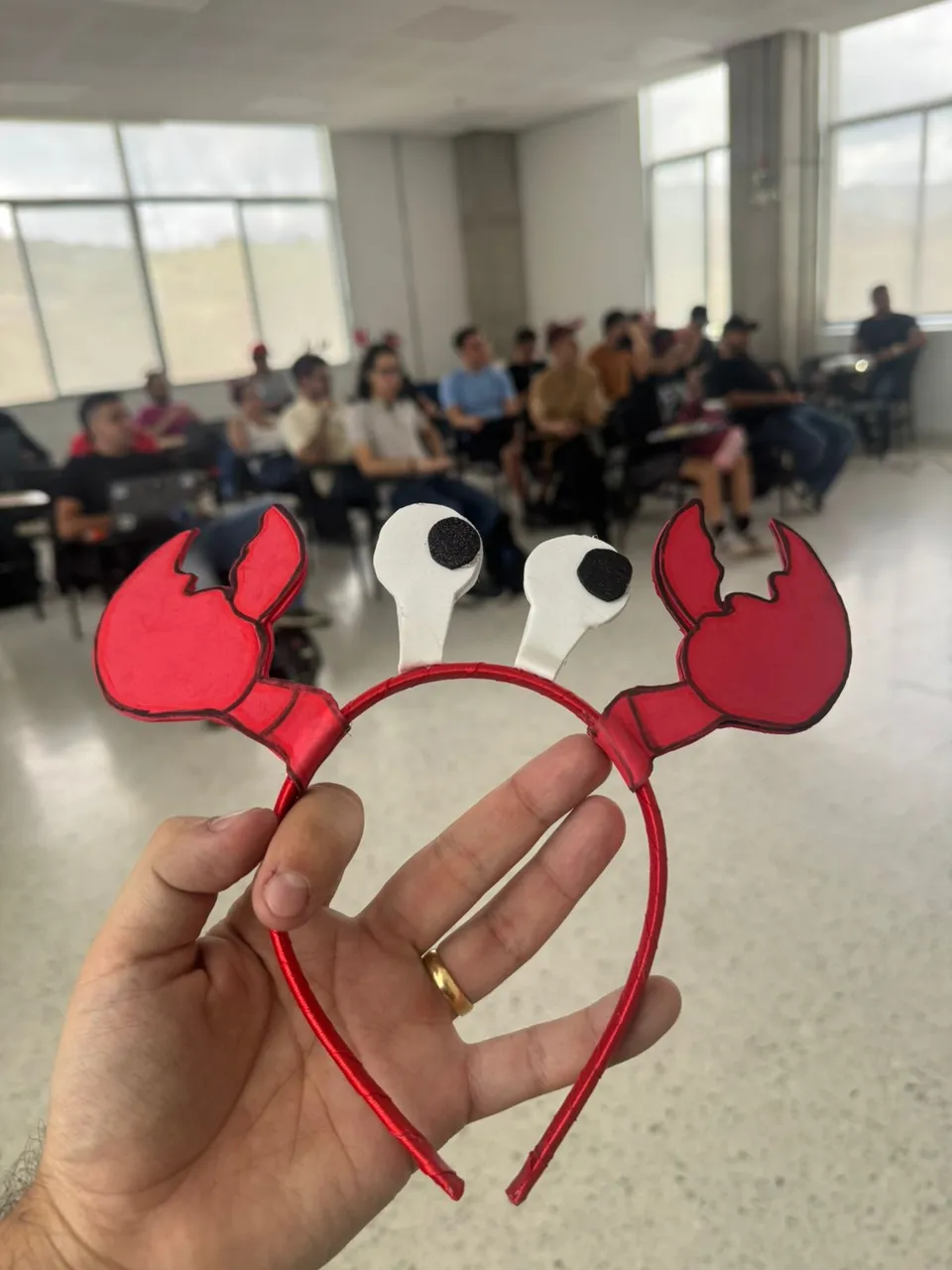
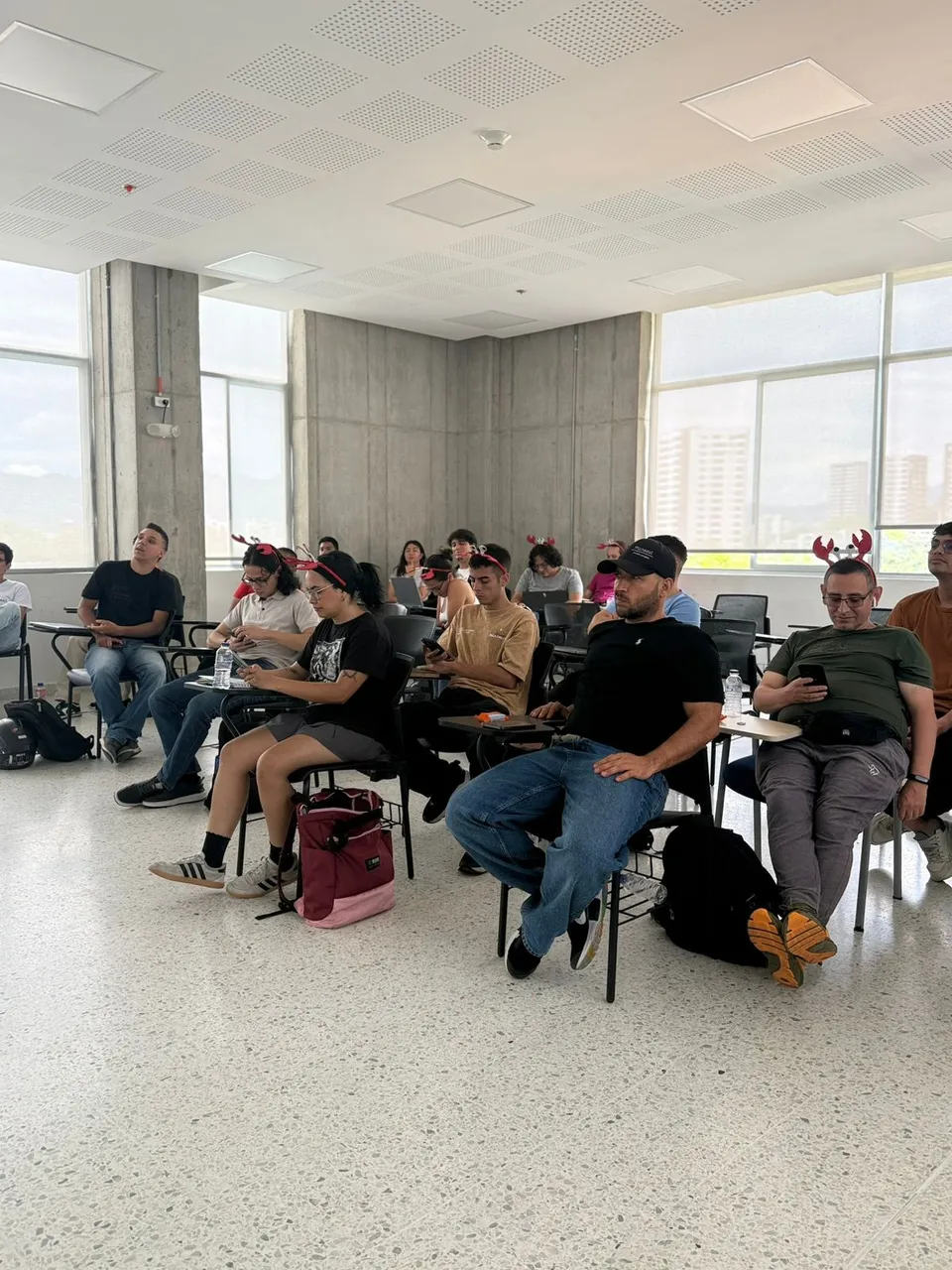
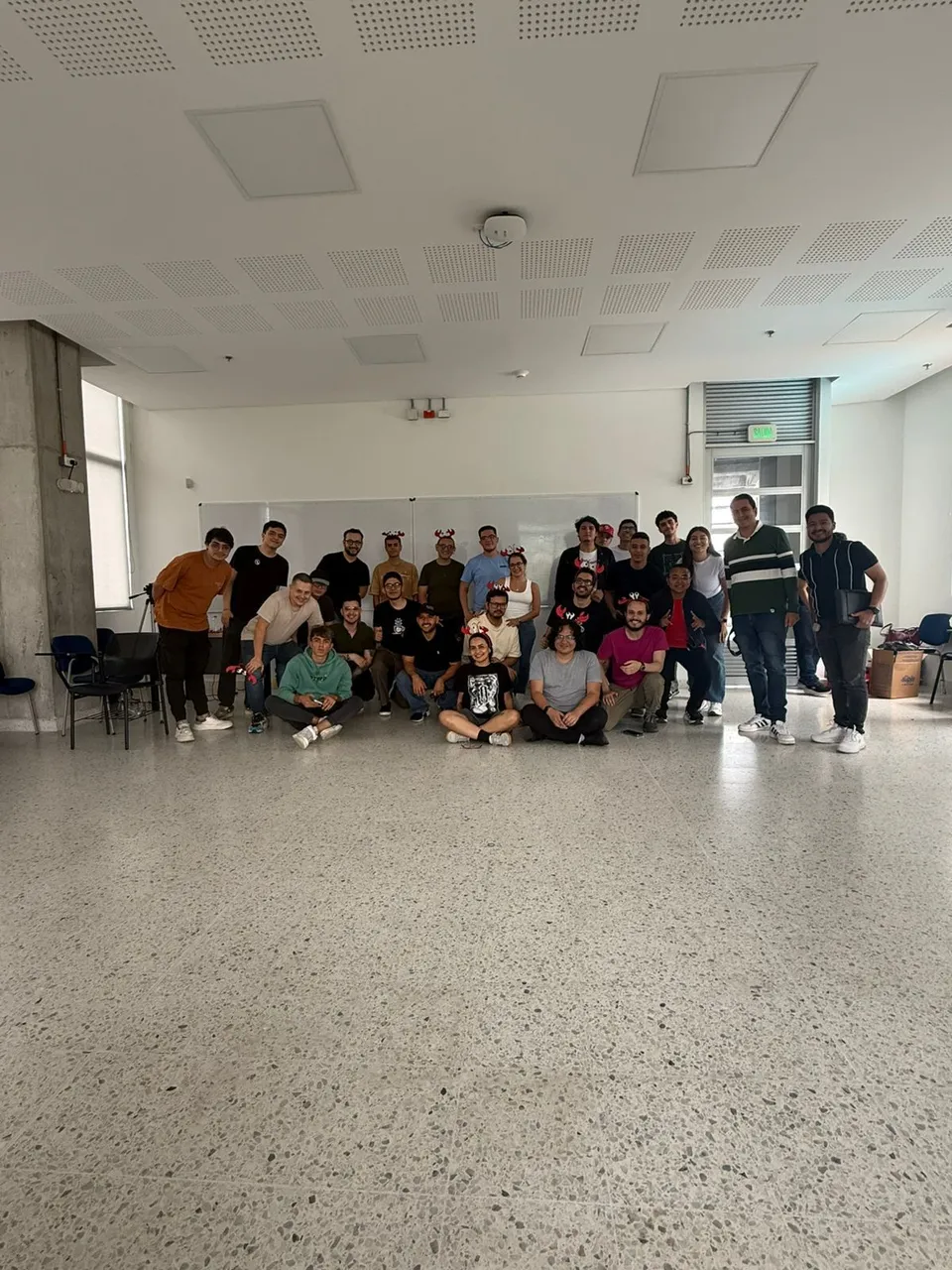
The easiest way to spot a Moltys meetup is the room full of people wearing little red lobster claws on their heads. It’s a gathering of the OpenClaw community, and this one is at the Universidad Tecnológica de Pereira, with the support of Cursor. I got the chance to help lead the workshop, sharing my own experience and what I’ve been learning about OpenClaw. If you know the project, the lobster headbands make sense; if you don’t, that’s the first thing worth explaining.
A Moltys meetup — a room where everyone’s wearing lobster claws on their heads — is, above all, a gathering of enthusiasts. The idea is to open the floor so the community can show what they’re actually building with OpenClaw. People come to share their own setups, their experiments, the weird and useful things they’ve wired up — and the morning turns into a back-and-forth between everyone. That format is the part I like most: you learn far more from ten people’s real projects than from the best slide deck.
My part: history, use cases, architecture
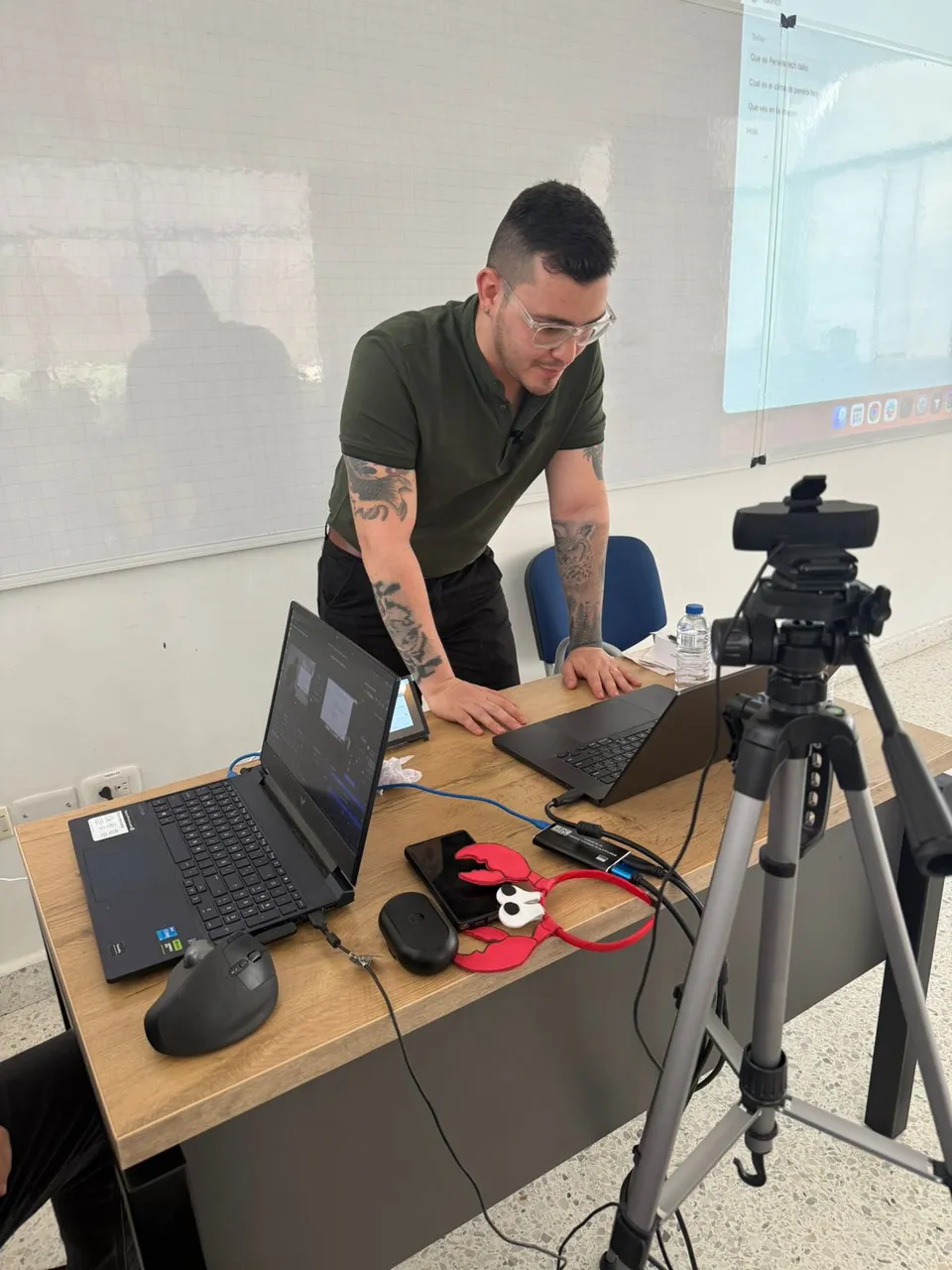
My job is to set the table — share my own experience with OpenClaw so the rest of the morning has a common starting point. I keep it to three things: where it came from, what people actually use it for, and how it’s put together underneath.
The history is a good story, and I won’t retell all of it here — it’s exactly what pushed me to write a separate, much longer piece on OpenClaw. The short version is the arc: a personal AI agent that runs on your own machine, configured in plain Markdown, talking to you through the messaging apps you already use, and connecting to whatever model you choose. From there it grew into one of the fastest-moving open-source projects anyone has seen.
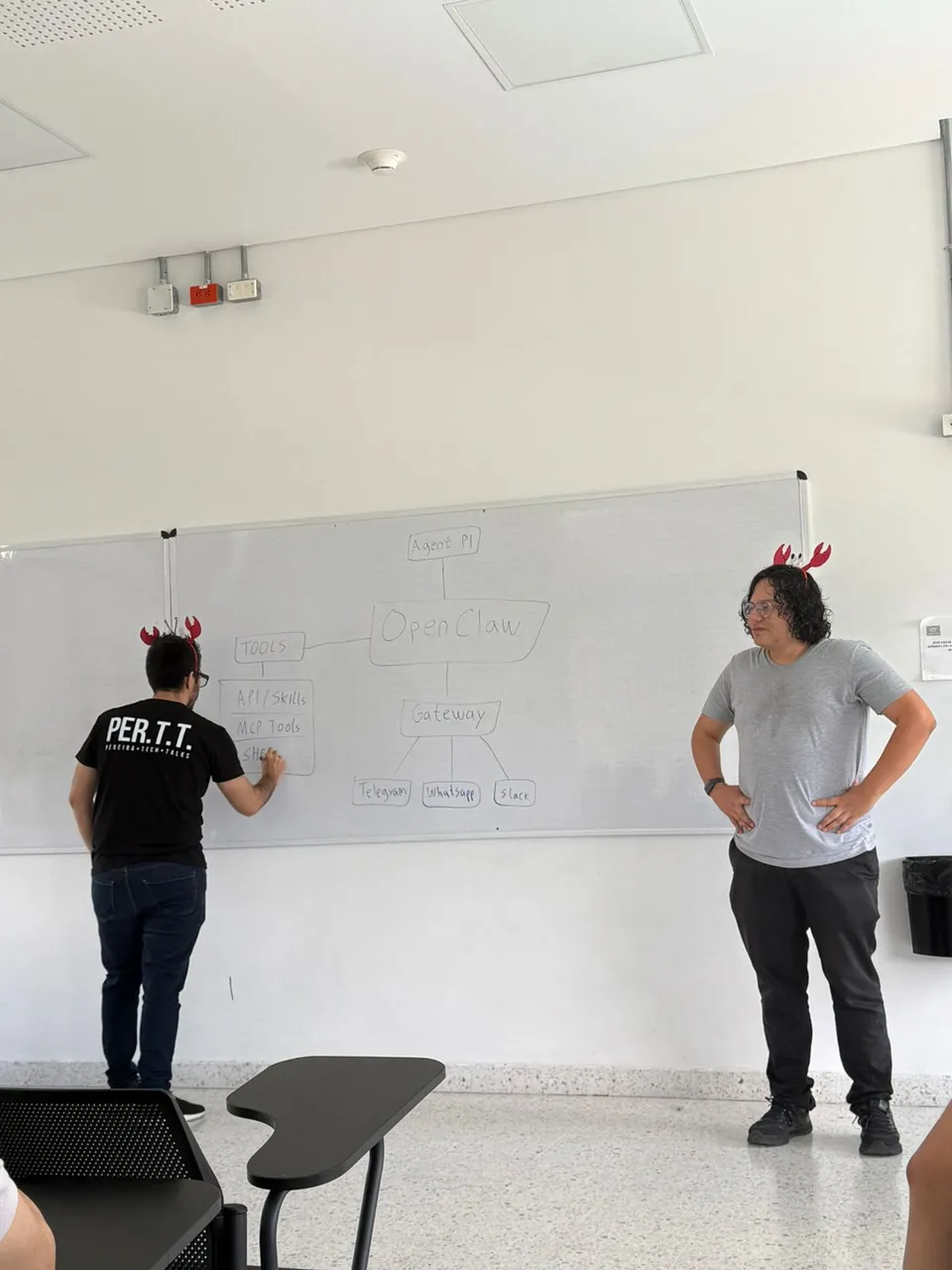
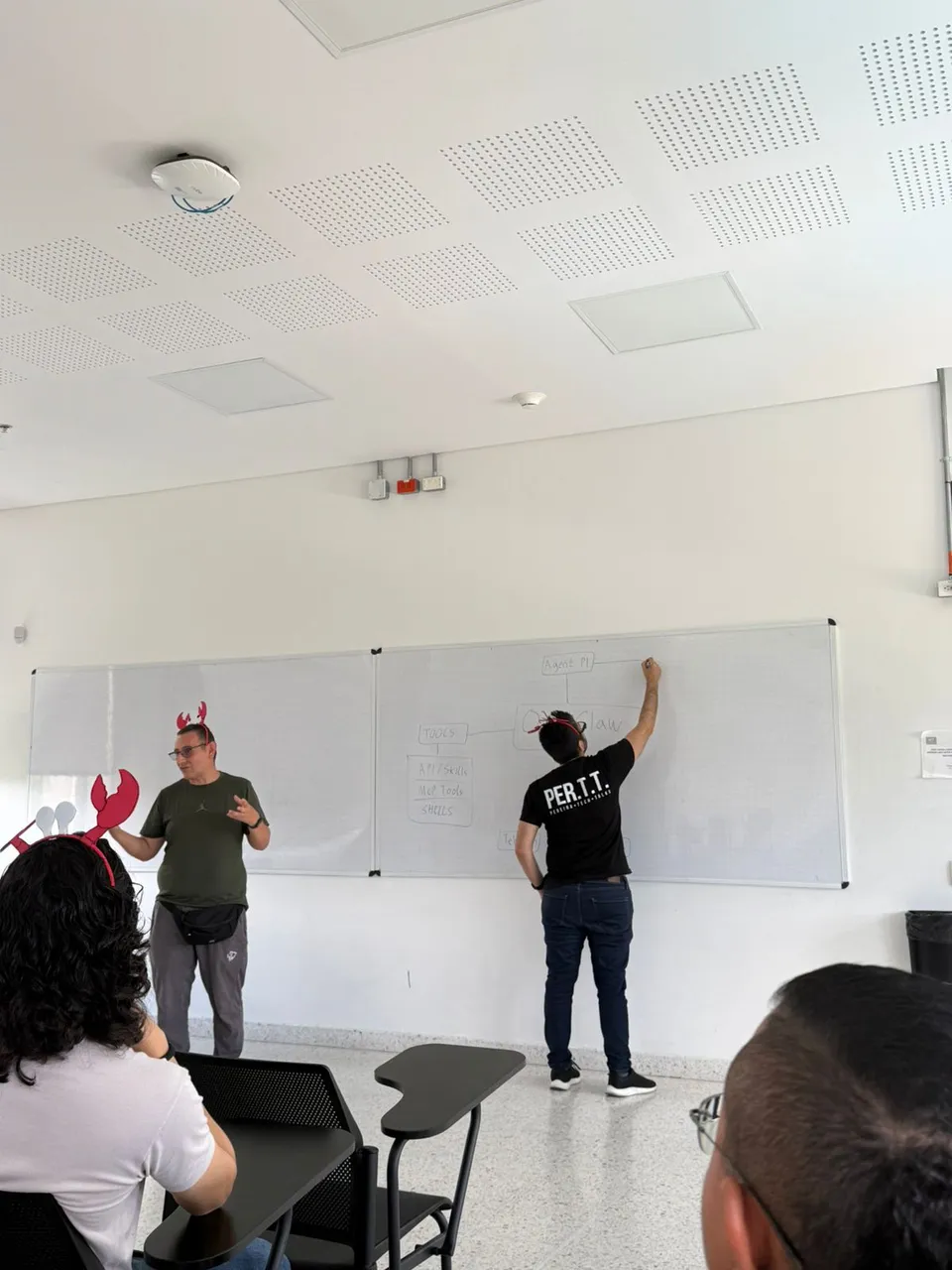
For the architecture I go to the whiteboard, because it’s easier to draw than to describe. An agent at the top, OpenClaw in the middle, a gateway fanning out to Telegram, WhatsApp, and Slack, and a set of tools hanging off the side — APIs, skills, MCP tools, shells. That one sketch explains most of what makes the thing tick.
If you want the full version — the person behind OpenClaw, the technical decisions, the community chaos, and where personal computing goes from here — that’s the piece I go deep in: OpenClaw: Your Assistant. Your Machine. Your Rules.. Getting ready for a morning like this is exactly what makes me want to write it all down properly.
The best part is the room
The slides and the whiteboard are the excuse; the people are the point. What makes it a good morning is sharing a few hours with a community that’s actually curious about this stuff — comparing setups, asking the kind of questions that only come from people who’ve already tried something and hit a wall, and trading the small tricks that never make it into documentation.
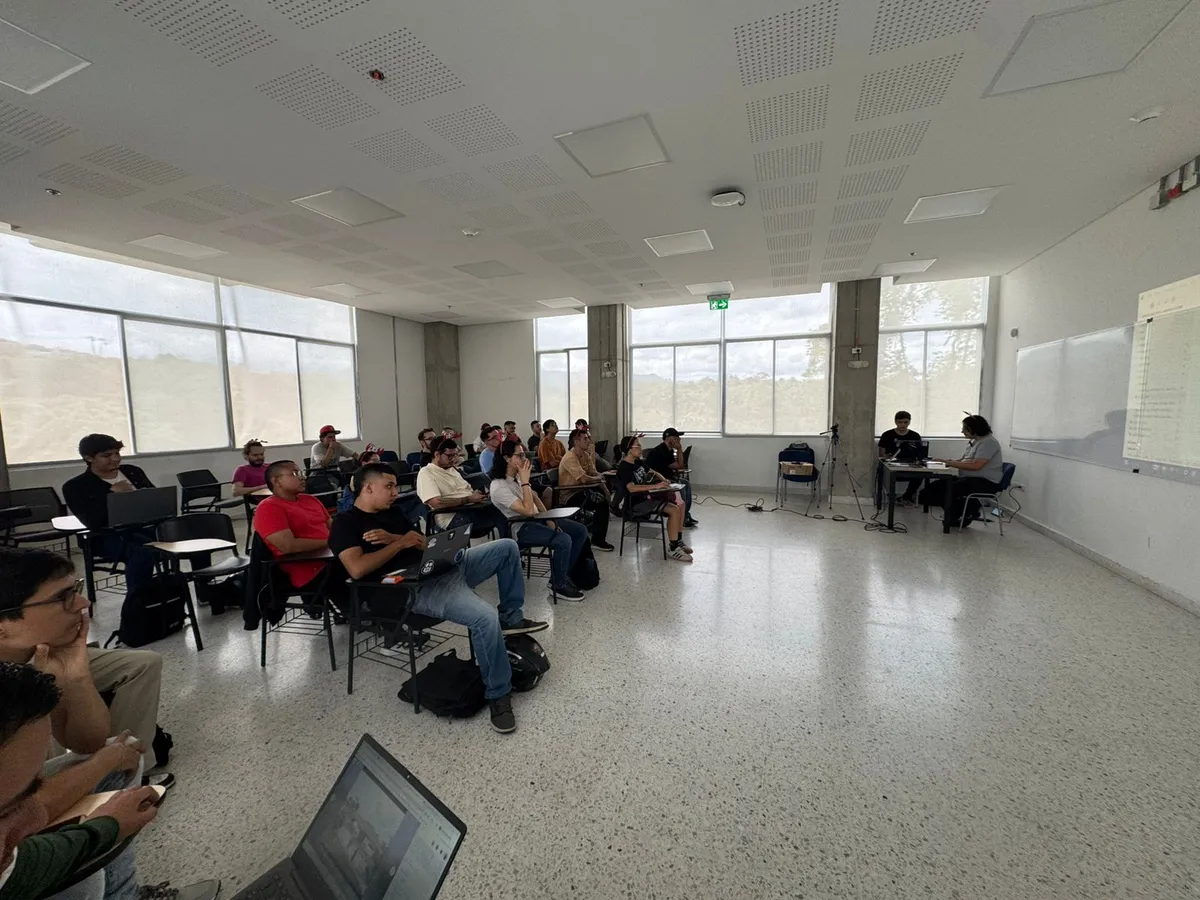
Thanks to the UTP for hosting us, to Cursor for backing the event, and to everyone who shows up with their projects and their claws on. Mornings like this are why local communities matter — you walk out with more than you walked in with.
Memories from the event
Let’s keep building.
Resources
- OpenClaw — the personal AI agent the whole morning is about (docs)
- OpenClaw: Your Assistant. Your Machine. Your Rules. — the in-depth history behind the talk
- Cursor — the AI code editor that backs the event
- Universidad Tecnológica de Pereira — our hosts for the morning
Sergio Alexander Florez Galeano
CTO & Co-founder at DailyBot
Colombian software engineer and entrepreneur (DailyBot, YC S21). I write about AI agents, developer tools, startups, and the craft of software engineering — and I build this site in the open at XergioAleX.com.
Stay in the loop
Get notified when I publish something new. No spam, unsubscribe anytime.
No spam. Unsubscribe anytime.